
Author: Nanaimo Moss Removal
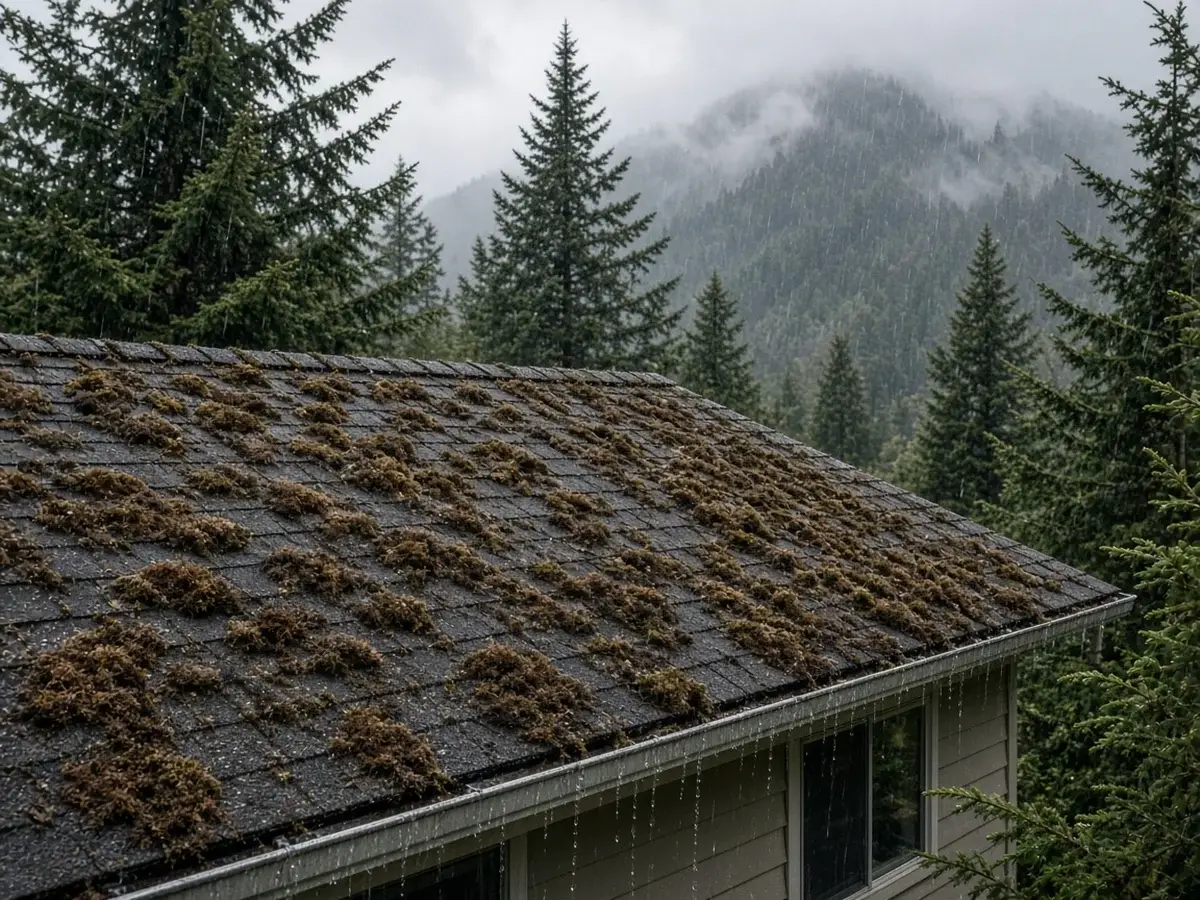
Short version: choose your soft wash date by counting back from when you want the roof to look clean. Treated moss browns and lets go over the following weeks, so the visit date and the clean-roof date are always weeks apart.
Most of the timing questions we get in Nanaimo start with a deadline. Family are coming in July. The house goes on the market in spring. A roofer is due to look at the flashing. Or the homeowner simply wants it handled before the fall storms roll in off the Strait of Georgia. Each of those goals points to a different week on the calendar, and this post works through them one at a time.
Why the visit date and the clean-roof date are different
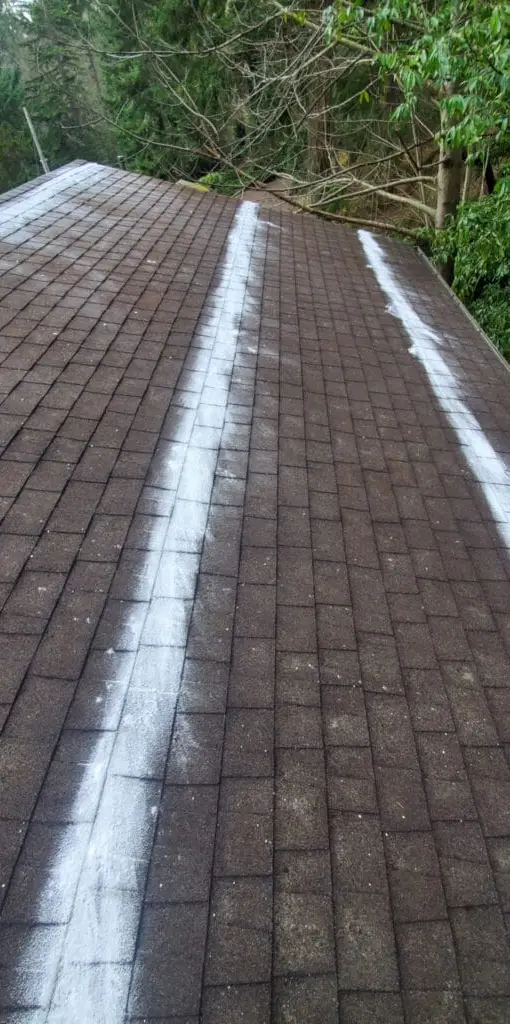
We remove roof moss with a low-pressure soft wash that carries the treatment onto the growth. Moss does not drop off the moment it is treated. It holds on with fine threads that the University of Maryland Extension calls rhizoids, and once the plant is no longer healthy those threads let go. Over the next few weeks the moss turns brown, loosens and is carried down the roof by rain.
That means rain is part of the process after the treatment has had its time on the roof. In the wet months it does the rinsing quickly. In a dry Nanaimo summer, browned moss can sit up there for longer simply because nothing is washing it away. Thick cushions take longer than a thin film, and the Asphalt Roofing Manufacturers Association (ARMA) says severe growth may need more than one application.
So the useful question is not “what is the best month?” It is “when do I need it to look done, and how much moss is up there?”
Goal: a tidy roof by summer
If you want the roof looking clean for July and August, plan the visit for spring, roughly March to May. The moss is green and growing then, which is when Oregon State University says moss products do their best work, and spring showers are still around to rinse the dead growth away over the weeks that follow.
The one thing to watch in early spring is a run of heavy rain straight after the visit. We pick a settled gap in the forecast with you. Spring is also when the phone gets busy, so ask early if a date matters.
Goal: ahead of the fall storms
For a roof you want treated before the long wet stretch, aim for late summer into early fall. By then the dry season has given the shingles a chance to dry out, and the first light rains are starting to green the moss again, which suits a treatment.
Leaves and fir needles land at the same time of year. ARMA recommends keeping gutters clear and cutting back branches that shade the roof, because wet litter holds moisture against it. If the gutters are packed too, we clean those as well, from $165, and doing both in one visit is often the tidier plan.
Goal: listing the house
A home inspector is likely to note moss on the roof, and buyers notice it from the street. Give yourself several weeks between the visit and your listing photos so the treated growth has time to brown off and wash away. If the photos are booked for May, a March or early April visit is about right. If you are listing in fall, think July or August, and allow for a dry summer slowing the rinse.
Tell us the listing date when you ask for a quote so we can plan around it.
Goal: just stop it getting worse
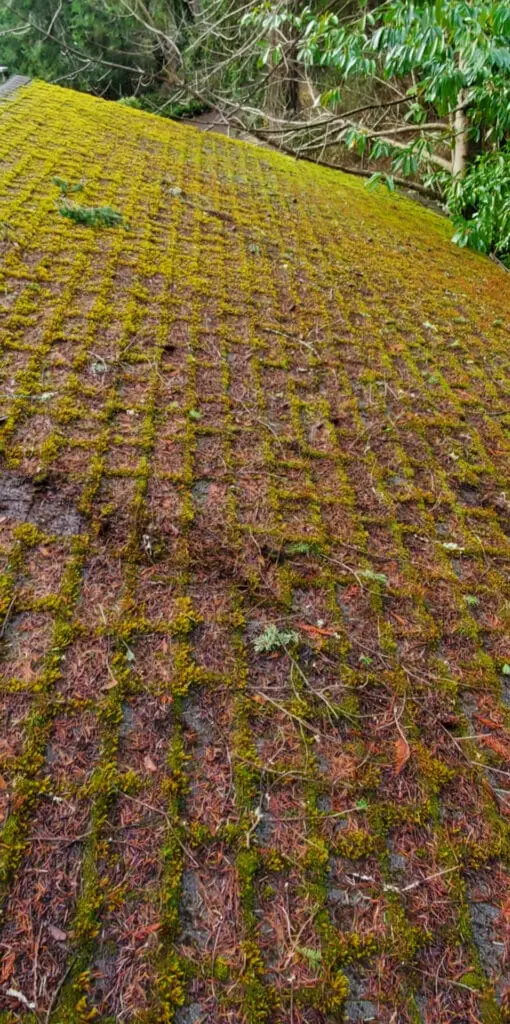
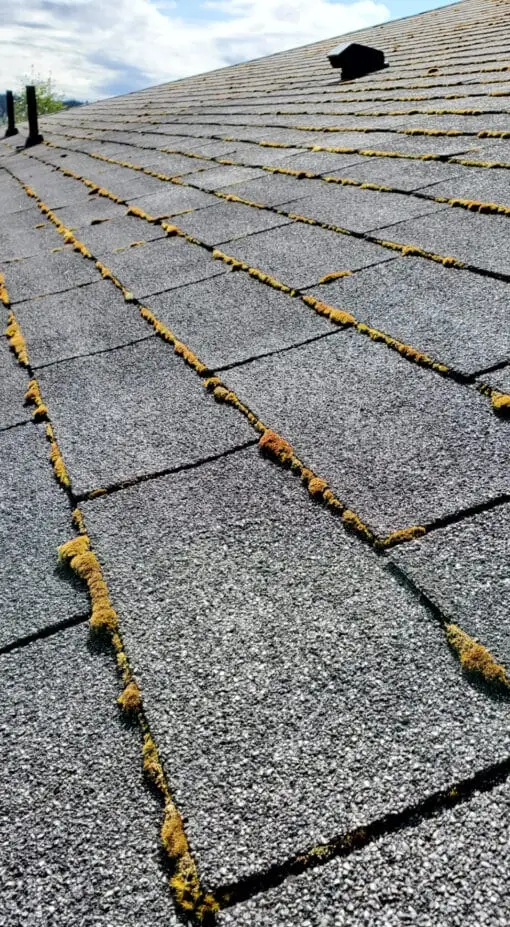
Not everyone has a deadline. If the moss is already thick, the gutters overflow in an ordinary rain or shingle tabs have started to lift, the best time is the next suitable dry window, whatever the month. Moss left to thicken can pry shingles up, Oregon State University Extension warns, which opens a path for water. A thin film on an open slope can wait for a convenient date. A mat in the roof valley is worth getting on the list now.
What Nanaimo’s setting does to the plan
Moss grows hardest through the cool, damp months. The University of Arkansas describes it as favouring moist, shaded places, and a lot of Nanaimo fits that description. Homes on the slopes below Mount Benson, lots backing onto big Douglas firs in Harewood or Chase River, and north-facing roofs around Departure Bay stay wet long after the rain stops. Those roofs grow moss faster, dry out later in spring and tend to need attention sooner.
An open roof in north Nanaimo that gets sun most of the day is a different story. It dries fast, grows moss more slowly and gives a wider choice of dates.
Whatever the setting, we avoid a few kinds of day: heavy rain forecast soon after, since Oregon State notes moss products are rinsed off by continued rainfall; frost or ice on the shingles; strong wind that would carry spray where it should not go; and a roof still soaked from the night before.
How often to plan the next visit
There is no fixed schedule, and anyone who promises the moss will stay away is overselling. Shade and needle fall decide the pace. Many open roofs go a good while between treatments, while a roof under tall firs usually needs watching every year or two. What follow-up on a shaded roof looks like is covered on our moss treatment and prevention page.
What it costs
Roof moss removal with us starts from $495, with the moss treatment included. Size, pitch, roofing material and how thick the growth is move the figure. Our moss removal cost guide for Nanaimo breaks down what changes the quote, the roof moss killer myths post covers the DIY options, and the stage-by-stage treatment guide helps you judge how far along your roof is.
Timing questions from Nanaimo homeowners
Can moss be treated while it is raining?
It is better not to. Rain thins the treatment and carries it into the gutters before it has done its work, and a wet roof is slippery to stand on. We look for dry shingles and a calm few days ahead.
Is a mid-summer treatment worth it?
It can be, on an open roof with light growth. Sun-baked moss goes dormant and looks brown, so it can seem finished when it is only resting, and with little rain the dead growth takes longer to wash off. On heavy moss, spring or early fall is usually the better fit.
Should I clear the dead moss off myself once it turns brown?
We would leave it to the rain. A roof with loose moss on it is slippery, and ARMA advises against pressure washing asphalt shingles because the force strips away the protective granules.
How quickly does moss come back after a treatment?
That depends on shade, needle fall and how the roof faces. Open slopes can go a long time; a north slope under firs can show green again sooner. Keeping valleys and gutters clear helps a treatment last.
Tell us your date
Nanaimo Moss Removal has been treating roofs across the mid-Island since 2021. We work from Nanaimo out to Lantzville, Cedar, Nanoose Bay and Ladysmith.
Call (778) 762-3475, text us a photo, or use the quote form. Tell us your neighbourhood, whether the roof is shaded and the date you are working towards, and we will suggest a week that fits. You can also read about our roof moss removal service and roof cleaning.
These figures are a guide, not a quote. The size and steepness of the roof, what it is made of, how we reach it and how heavy the moss is all change the price, so every job gets its own free written quote once we have seen the roof.
A starting price, not a flat rate. How tall the house is, how many metres of gutter it has, where a ladder can stand and how packed the troughs are decide the real number, and you get that number in writing, free, before any date is set.