
How a demoss visit runs
Roof Demossing in Nanaimo: How One Visit Runs
Roof demossing in Nanaimo and Lantzville, told from the homeowner's side: what happens between our truck pulling up and the last tarp coming off your flower beds.
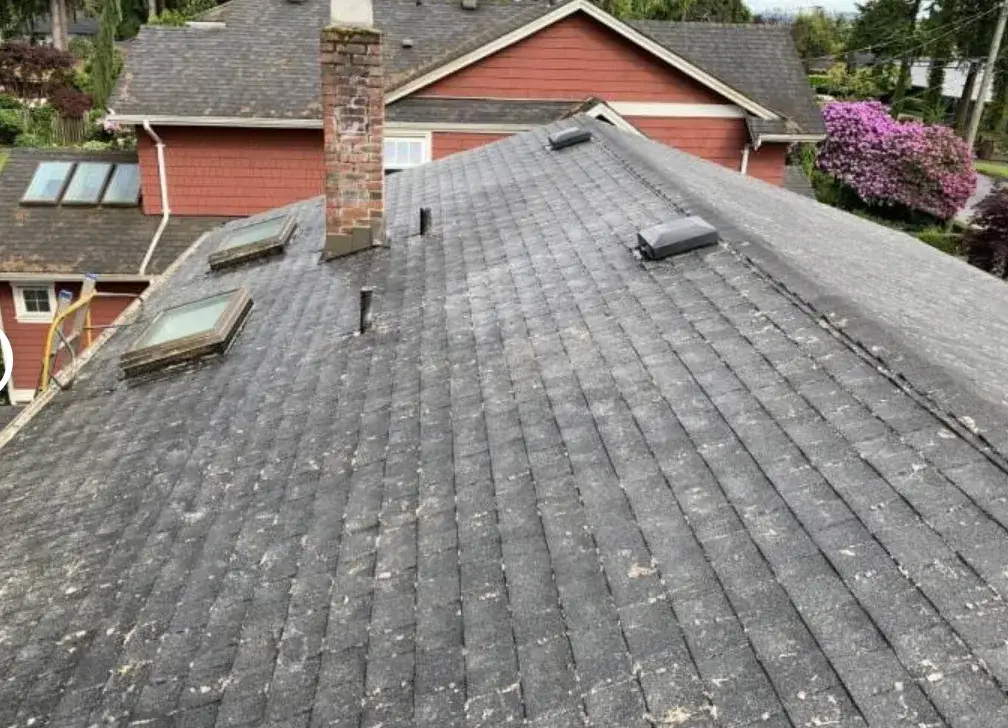
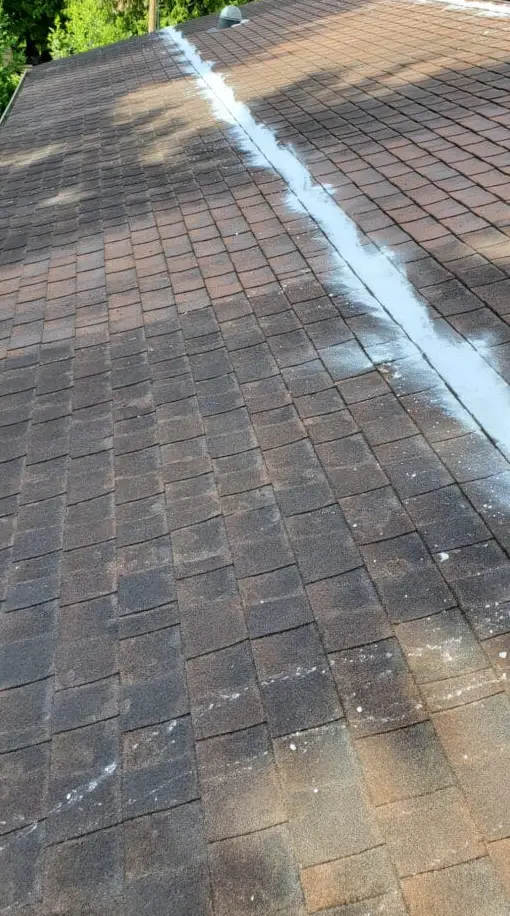
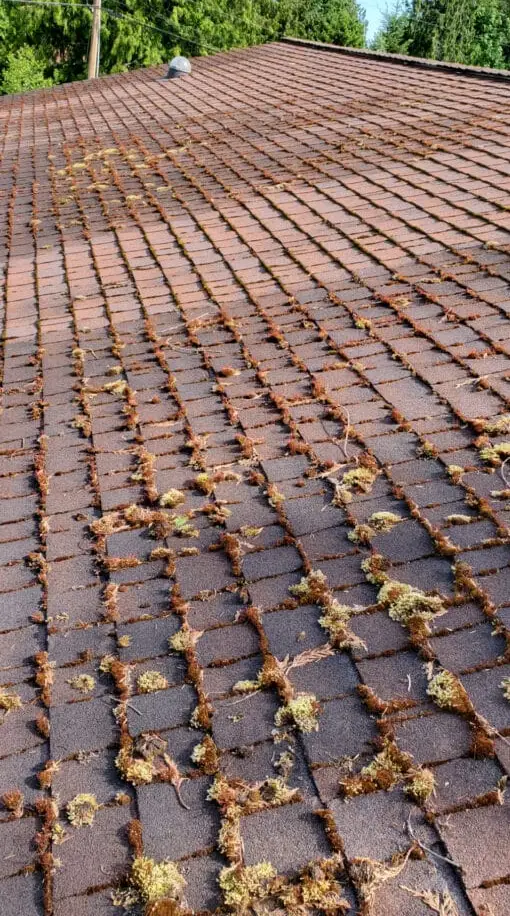
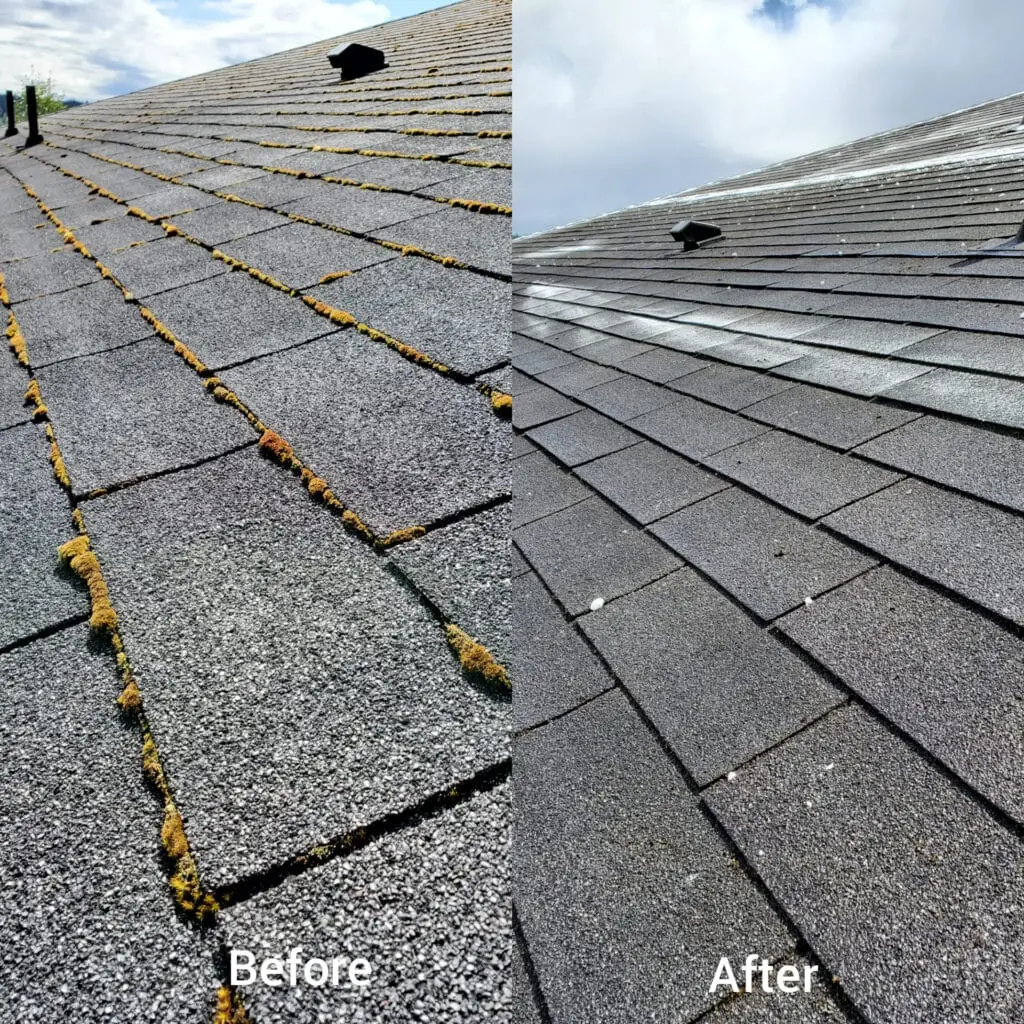
Before
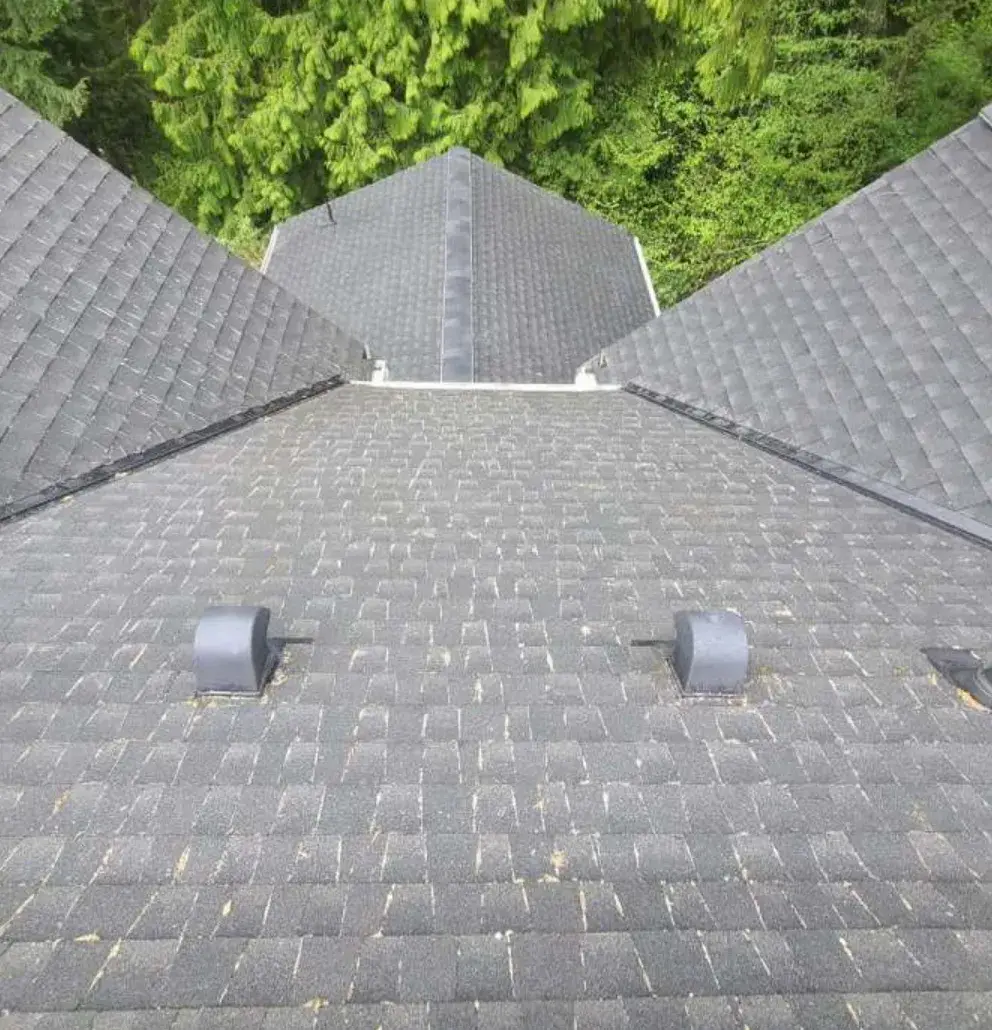
After
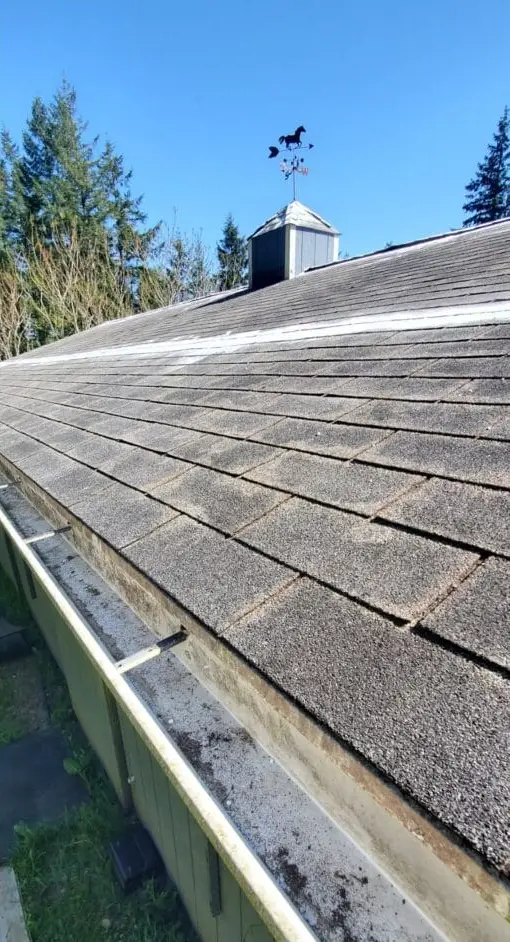
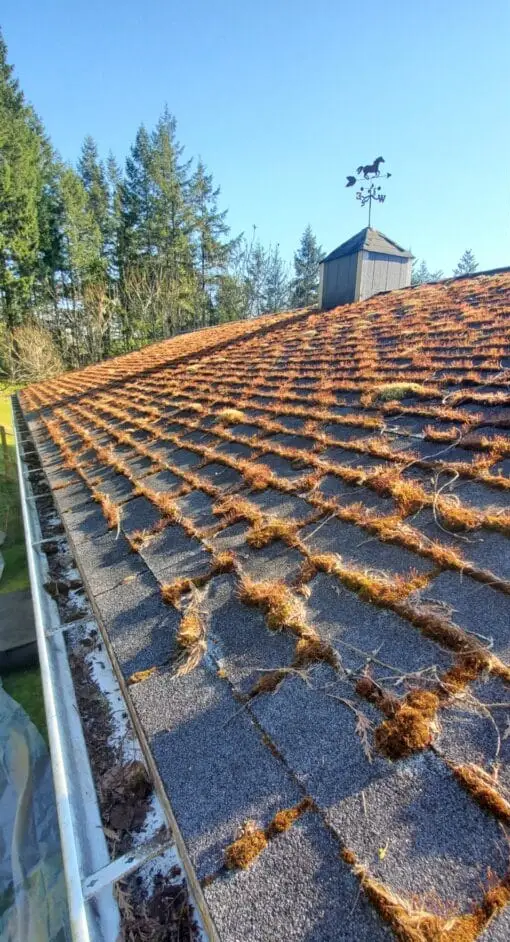
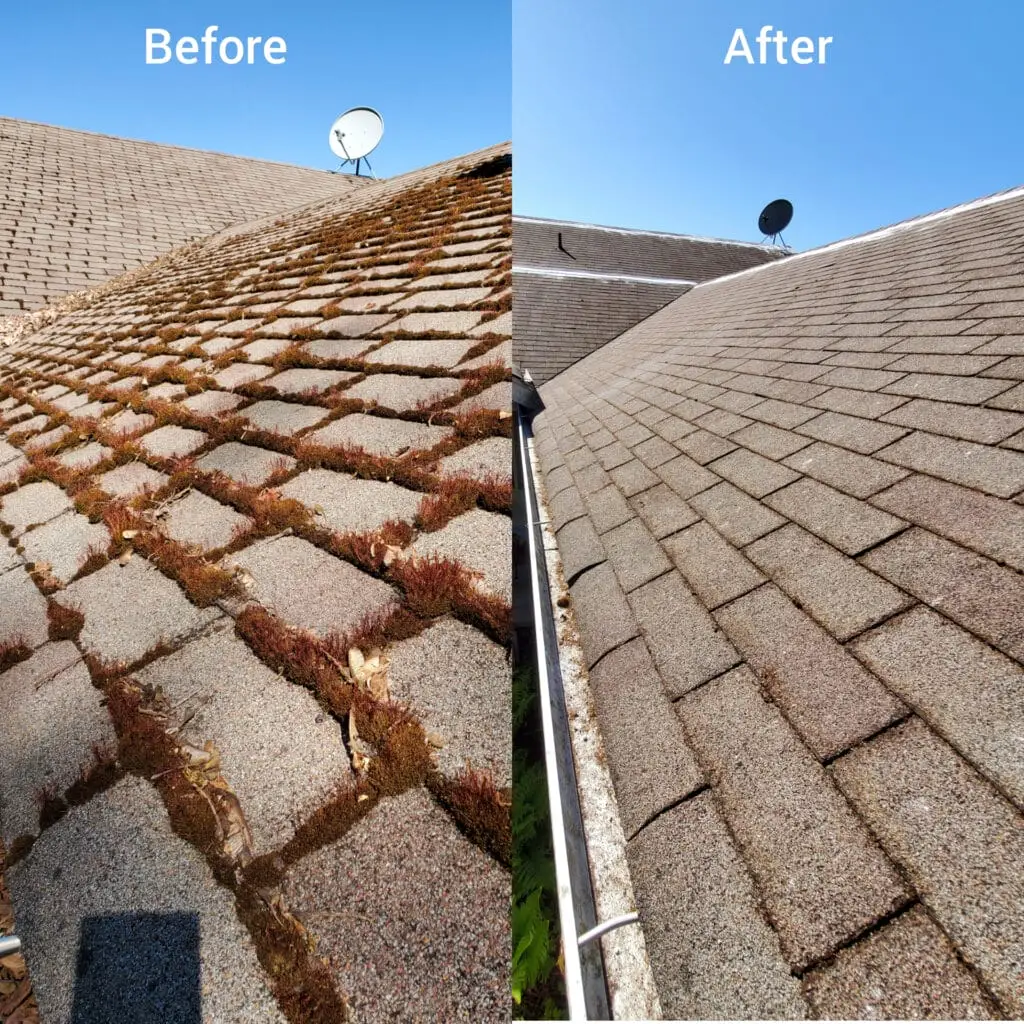
Before
After
Why us
Why customers love our roof demossing
A demoss visit is as much about your garden, your downspouts and the tidy-up as it is about the roof. These are the parts every visit includes.
- A walk round the house and yard before any ladder goes up
- Tarps over beds, shrubs, ponds and patio furniture under the eaves
- A low-pressure soft wash over every slope, valley and ridge, carrying the moss treatment into the growth
- High pressure never on shingles or shakes; it is kept for concrete driveways and walkways
- Moss treatment included in the price, so the growth dies back and weathers off the roof
- Gutters checked afterwards for any moss the wash carried down
- Paths, decks and the driveway left clean before we leave
- A plain account of shingle, flashing and vent condition
Before and after
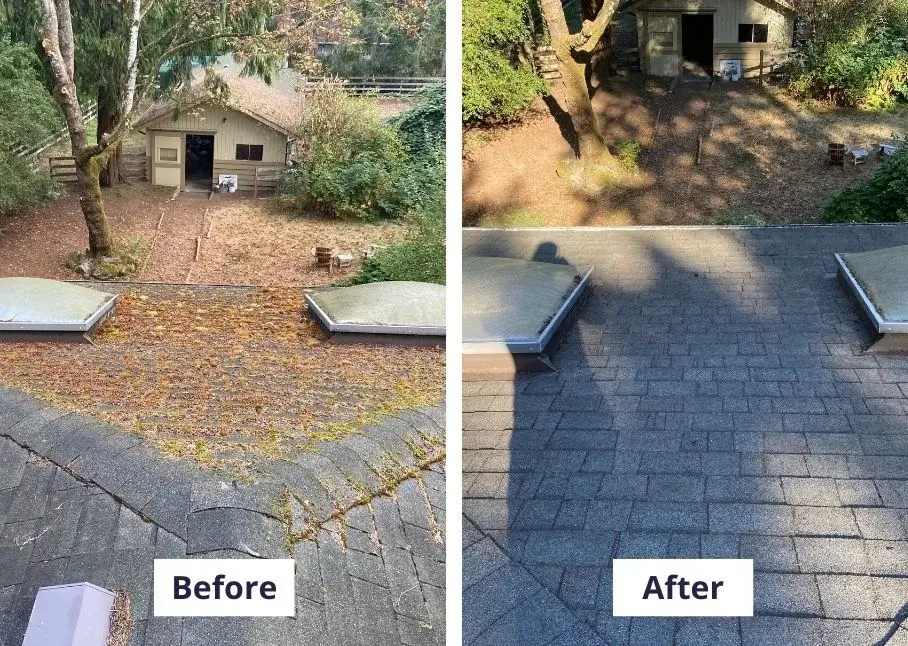
Roof demossing: one roof, before and after
A mossy surface and a cleared one, shown side by side.
Google reviews
Our google reviews:
5.0on Google
5out of 5 stars
the most trustworthy and dependable guys I know. Always guaranteed to have an incredible experience.
R. S.
Review on Google5out of 5 stars
Oct 2026
Great job! Very reasonably priced. Extremely timely!
Katie L.
Review on Google5out of 5 stars
Oct 2026
Reliable and trustworthy service. Happy to recommend! Thank you.
Angela S.
Review on Google
Roof demossing in Nanaimo or Lantzville is easier to plan for when you know what the day involves. This page walks through a visit in order, from the conversation before we arrive to what the roof looks like a month later. If you want the case for removing moss at all, and why we never put a pressure washer on shingles, that is on our roof moss removal page. Here we stick to what you will see and hear while we are at your house.
Before a roof demossing visit
A few details save time on the day. Tell us whether the side gates lock, where the dog spends the day, and whether anything is stored against the walls of the house. Firewood stacks, kayaks, garden boxes and hot tub covers all sit right where moss and grit come down, so we ask about them when we quote.
It also helps to move vehicles off the driveway the night before, particularly if they are parked under the eaves. A clump of wet moss dropping onto a windshield is harmless, but cleaning up after it is quicker if the car is not there in the first place. Patio chairs and barbecues close to the house can stay put; we cover them.
We book demoss work for dry spells. The wet season here runs roughly from October to March, and the roof needs to be dry on the surface before anyone walks it. If the forecast turns, we call you and move the visit rather than start on a slick roof.
Getting onto the roof
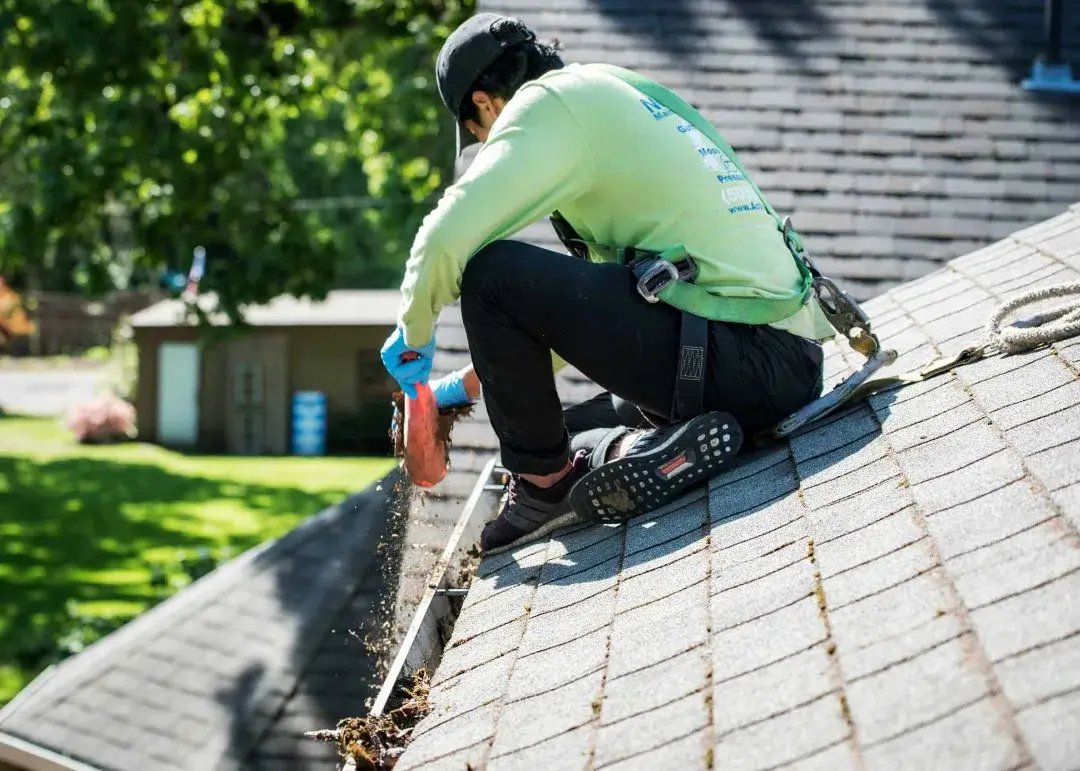
The first job on site is choosing where the ladders go. Each one needs firm, level footing and a solid spot against the roofline, away from flower beds, soft lawn and the edge of a deck. Hillside houses above Departure Bay often have a much taller wall at the back than at the front, so we plan around the lowest ground, not the street side.
Once up, we look at the pitch and the material before stepping out. Asphalt shingle on a moderate pitch can usually be walked with care. Steeper slopes, older brittle shingle and cedar shake get worked more slowly, sometimes from the ladder at the edge, with weight kept off the most fragile courses. Skylights, vent stacks and satellite dishes get worked around rather than leaned on. If part of the roof cannot be reached safely, you hear that before we start on it.
Covering the garden
Wash water, grit and the odd clump of moss run off the roof onto whatever sits beneath it. Before the wash starts, we lay tarps over beds and shrubs along the drip line, cover ponds and rain barrels, and turn downspout outlets away from vegetable beds or cap them for the duration. Houses in Harewood and on the slopes of Mount Benson often have mature rhododendrons and hydrangeas planted hard against the foundation, and those get covered first.
On waterfront lots, we also watch the seaward side, where a bank or a retaining wall may fall away below the eave. Nothing gets rinsed over the edge.
Demossing the roof, ridge to eaves
We start at the ridge and work downhill, one slope at a time, with a low-pressure soft wash. How the mix is made up and how heavily it goes on are set for the roof in front of us: a thin film on a sunny pitch needs less than a thick cushion on a north slope. Working downhill keeps the spray running the same way the shingles overlap, so water never gets driven up under an edge.
North-facing slopes and anything under big Douglas fir or bigleaf maple usually carry the heaviest growth and take the longest. Valleys, where two slopes meet and debris collects, are soaked all the way down to the eave. Ridge caps and hips get the same attention, because moss along the cap line is easy to miss from the ground.
The wash carries the moss treatment into the growth and over the thin green film, at a pressure low enough that water runs over each lap and never gets pushed up underneath it.
That treatment is part of every demoss we do, not an add-on. Nothing is pried or pulled off, so the granules stay bedded in the asphalt. The moss dies where it sits, turns brown, and lets go with the rain over the following weeks.
Clean-up after the roof moss cleaning
When the roof is done, tarps come up carefully so nothing in them spills into the beds. Paths, decks, the driveway and window sills below the eaves are left clean. We check the gutters before we go and clear out anything the wash carried into them.
Before we leave, we tell you what we noticed up there: shingles with lifted or cracked edges, worn granules in the valleys, loose ridge caps, flashing pulling away around a chimney. Repairs are a separate decision and we leave that with you.
How it works
A demoss visit in four parts
Most houses are finished in one visit. The order below is the same on a small rancher and on a two-storey house with a steep back slope.
Set-up and cover
We walk the yard, choose ladder spots on firm ground, and lay tarps over beds, shrubs and anything sitting below the eaves before anyone climbs.
Soft wash, ridge to eave
Working from the ridge downhill, slope by slope, we apply a low-pressure soft wash that soaks into the moss and the green film. Nothing pushes against the lap, so no shingle edge gets lifted.
Let the treatment work
The moss treatment travels in that wash and is included in the visit. Treated growth dies back and lets go with the coming rain over the following weeks.
Clean-up and walk-round
Tarps come up, anything that landed on paths and decks is cleaned off, and we tell you what we noticed on the roof itself.
What a demossed roof looks like afterwards
Expect a roof that looks a great deal cleaner but not brand new. The heavy growth is gone and the shingle lines read clearly again from the street. Up close, you will see faint green or brown patches where the treated roots are still holding on. Over the next few weeks they turn brown, and the rain carries them off. By spring most roofs look even all over. Because of that gap, anyone with a deadline should read our guide to booking a demoss around the date you want a clean roof before choosing a week.
Moss will return in time, faster on a shaded slope than an open one. How quickly depends on tree cover and sun, and our moss treatment and prevention page covers what slows it. We demoss roofs across Nanaimo and the towns around it, and the quote is free. Ask for a quote and tell us roughly how big the house is and what trees stand over it.
Figures for a typical house are in the guide to how much roof demossing costs in Nanaimo.
The work
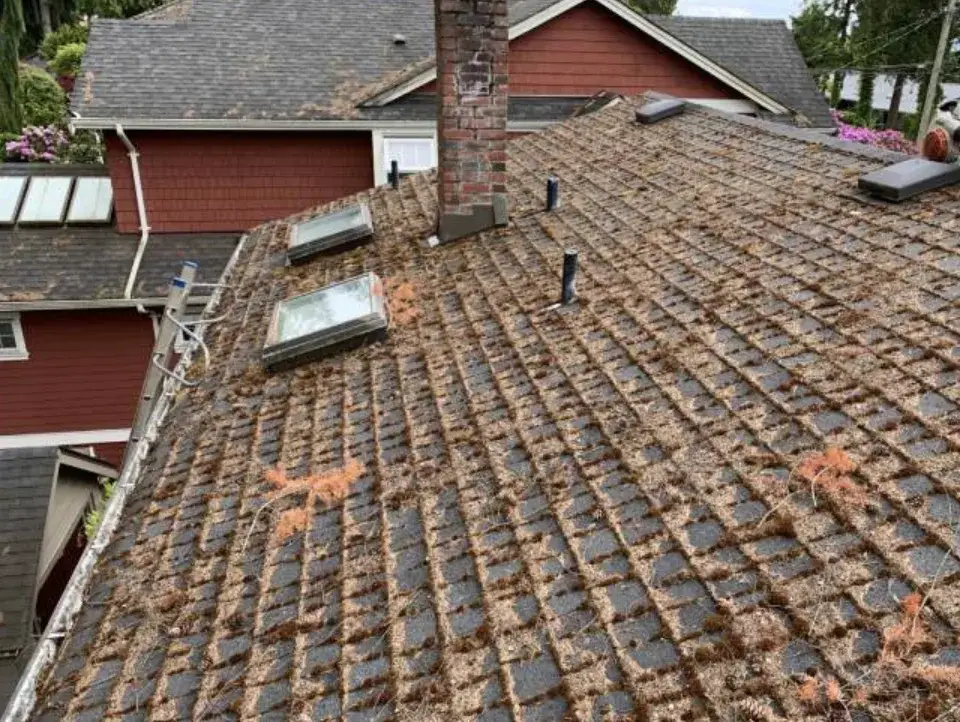
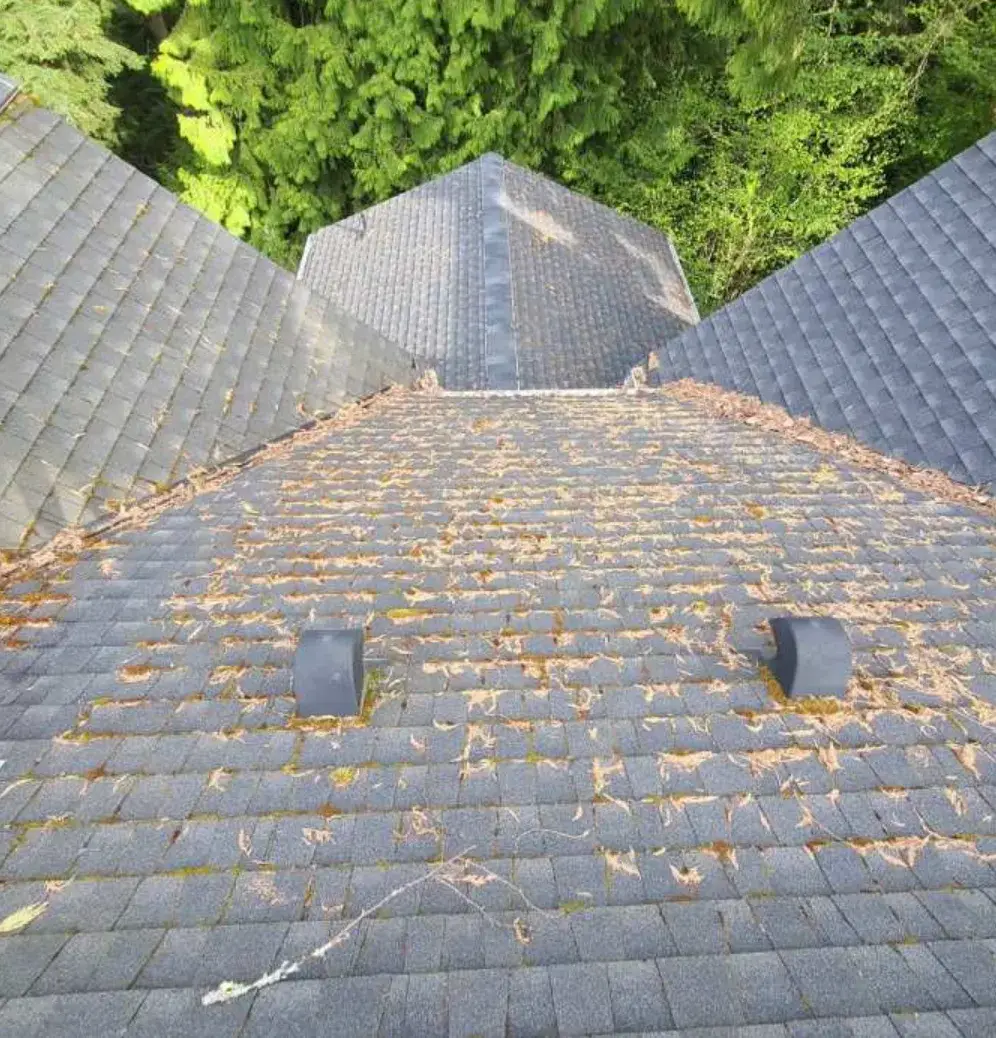
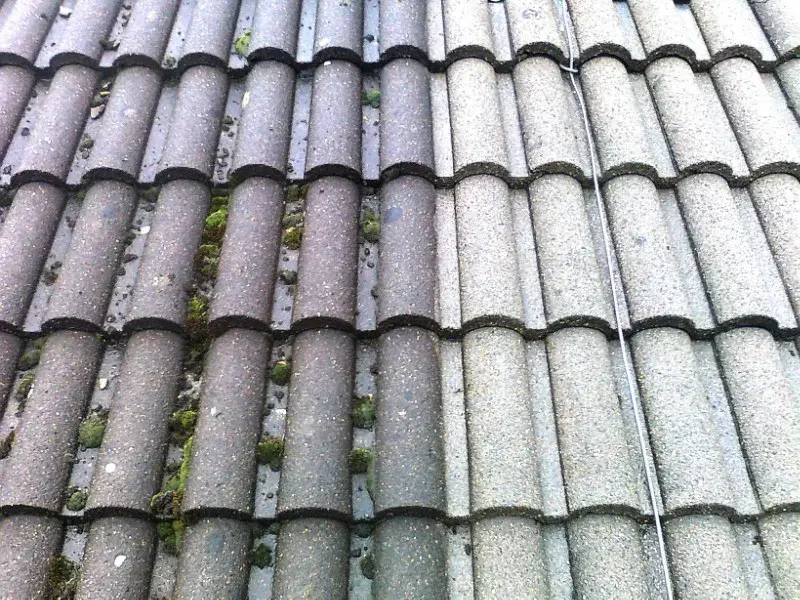
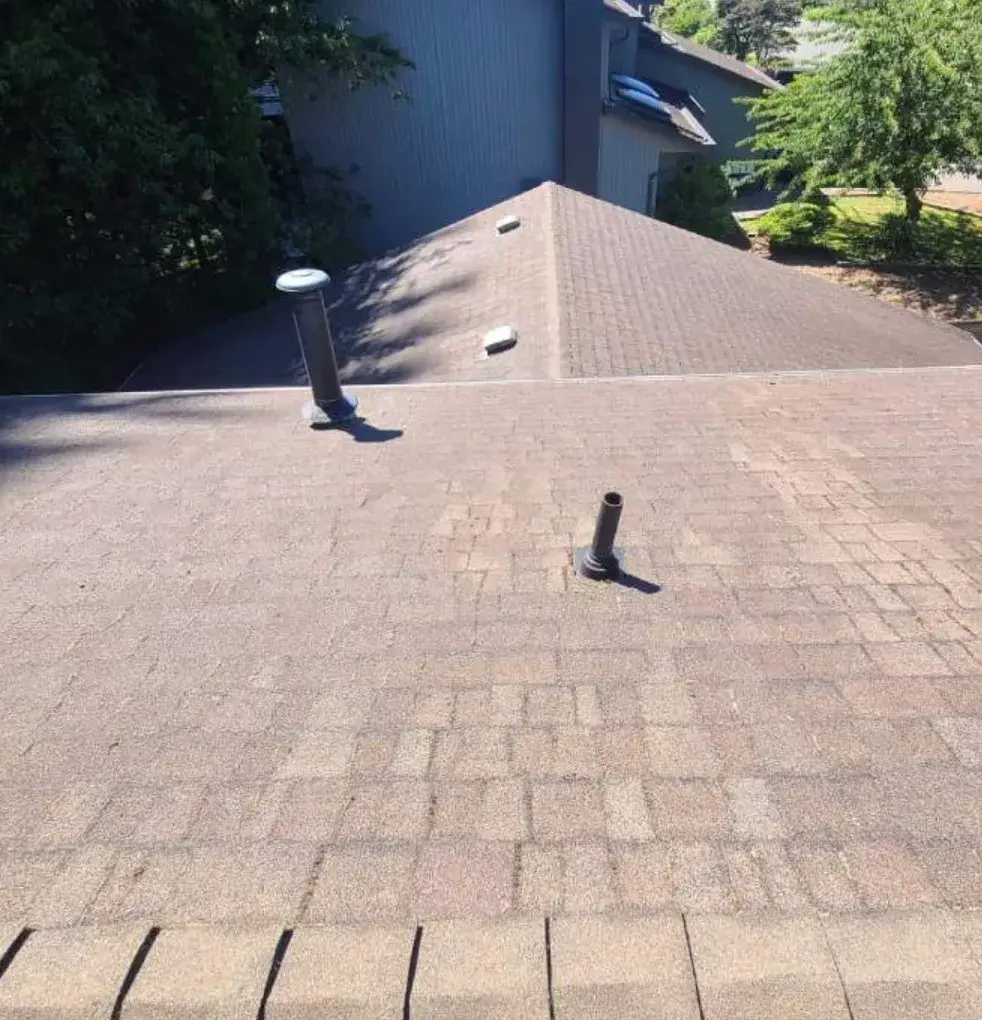
Roof demossing photos from our jobs
Why choose us
Our approach to roof demossing
Moss work since 2021
Five years of demossing Nanaimo-area roofs, from waterfront lots to houses tucked under the fir on the hills.
Treatment included
Every roof we demoss gets the moss treatment as part of the job, not as an extra added to the bill at the end.
Locally owned
Nanaimo Moss Removal is run by the same people who climb the ladders, so the person quoting is the person you talk to on the day.
A plain report
Before we pack up you hear what we saw on the shingles, flashings and vents, and any repair stays your decision.
Got questions?
Questions about the demoss visit
Do I need to be home while you demoss the roof?
Usually not. If the side yards and back garden are open to us, the work goes ahead without you. Leave the gates open, keep pets inside, and tell us about anything fragile near the walls.
When we finish we let you know, along with anything we noticed on the roof.
Is it noisy, and can we stay inside?
You can stay inside. The soft wash sounds much like a garden hose on the shingles and you will hear footsteps on the roof, but nothing like the roar of a pressure washer or a power tool.
If someone in the house works nights or a baby naps upstairs, mention it and we can start on the slope furthest from that room.
What happens if it rains on the booked day?
A wet roof is slippery and the treatment needs a dry surface to soak into, so we move the visit to the next dry stretch. On this part of the island that can mean a short wait between October and March.
We would rather call you the morning before than stand on a slick slope.
Will the treatment harm my plants or my fish pond?
We cover beds and ponds before any treatment goes on and keep it to the roof surface, with downspout outlets covered or turned away from planting while we work.
Tell us about rain barrels, vegetable beds and ponds when you book so we plan the covers for them.
Why is there still some moss showing when you finish?
Because a soft wash does not tear moss off a roof. Every patch you can see has been treated where it grows, so it turns brown over a few weeks and then the rain carries it away.
Our moss treatment and prevention page explains the months after that.
Do you clean the gutters as part of the visit?
We look into the gutters once the roof is done and clear any moss that came down with the wash, so none of it is left to block a downspout.
If the troughs were already full of needles and leaves, add gutter cleaning to the visit and every run is emptied and each downspout flushed.
How long does a demoss take on an average house?
A single-storey home with light growth is often finished by early afternoon. A two-storey house under heavy fir, or one with a lot of valleys and dormers, takes a full day.
You get a rough time with the quote, so you can plan around it.
Roof demossing in Nanaimo and the mid-Island
Send the address and a note about any beds, ponds or downspout outlets below the eaves, and a free roof demossing quote comes back to you.