
Frames, tracks and weep holes
Window Moss Removal in Nanaimo: Frames and Sills
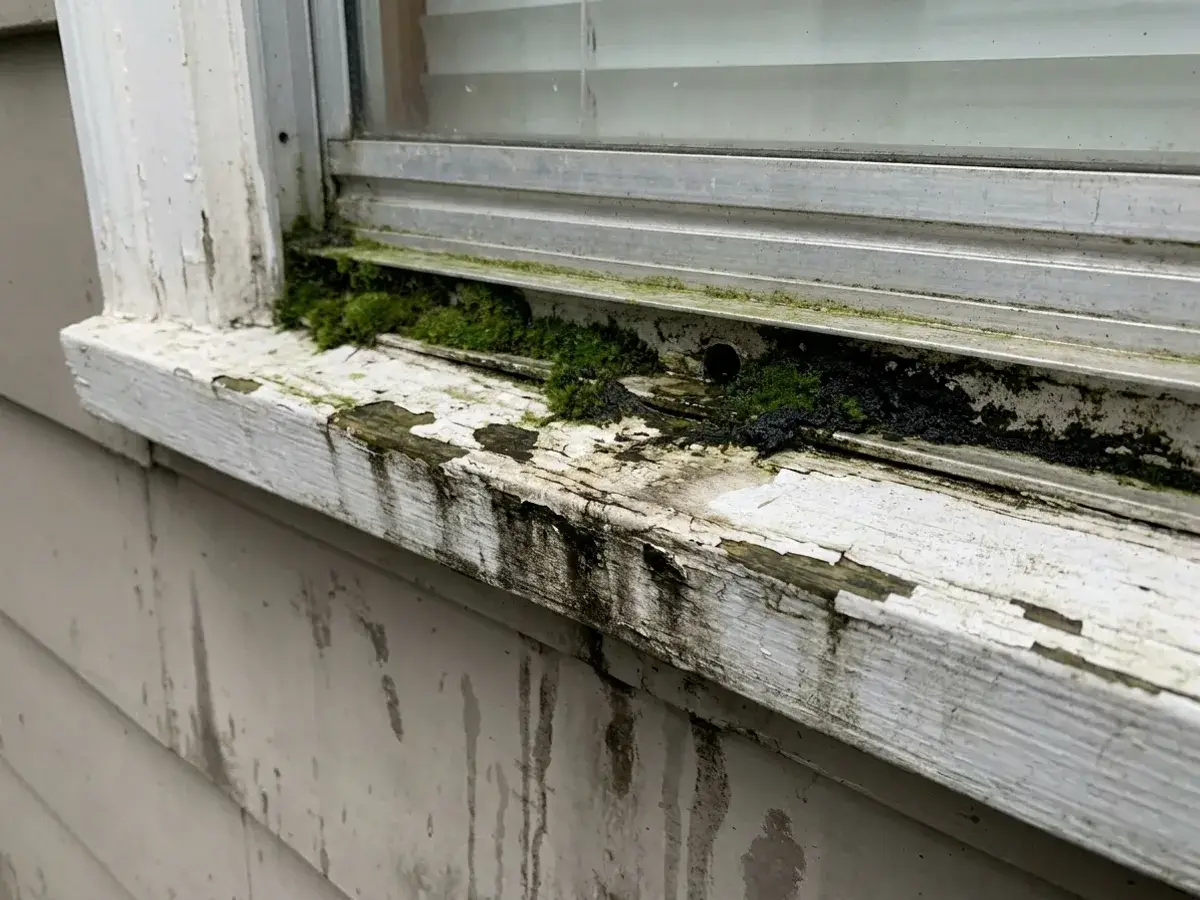
Window moss removal in Nanaimo is frame work, not glass work: we clear the sill, the sliding track and the little drain slots that let water out of the frame.
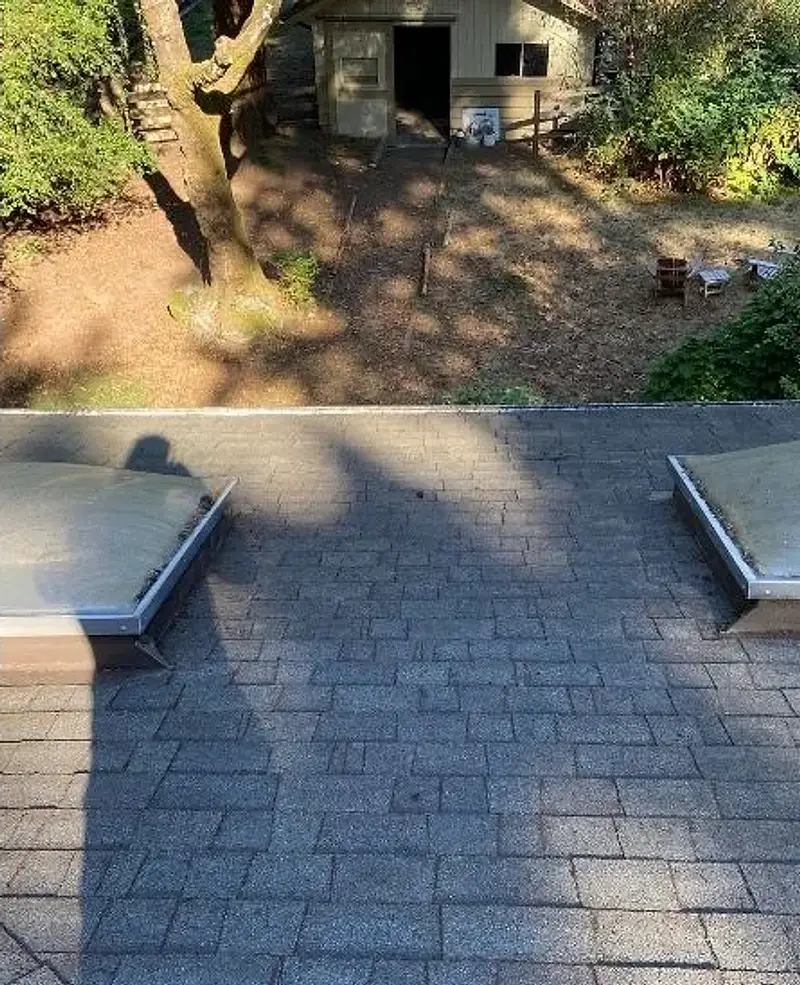
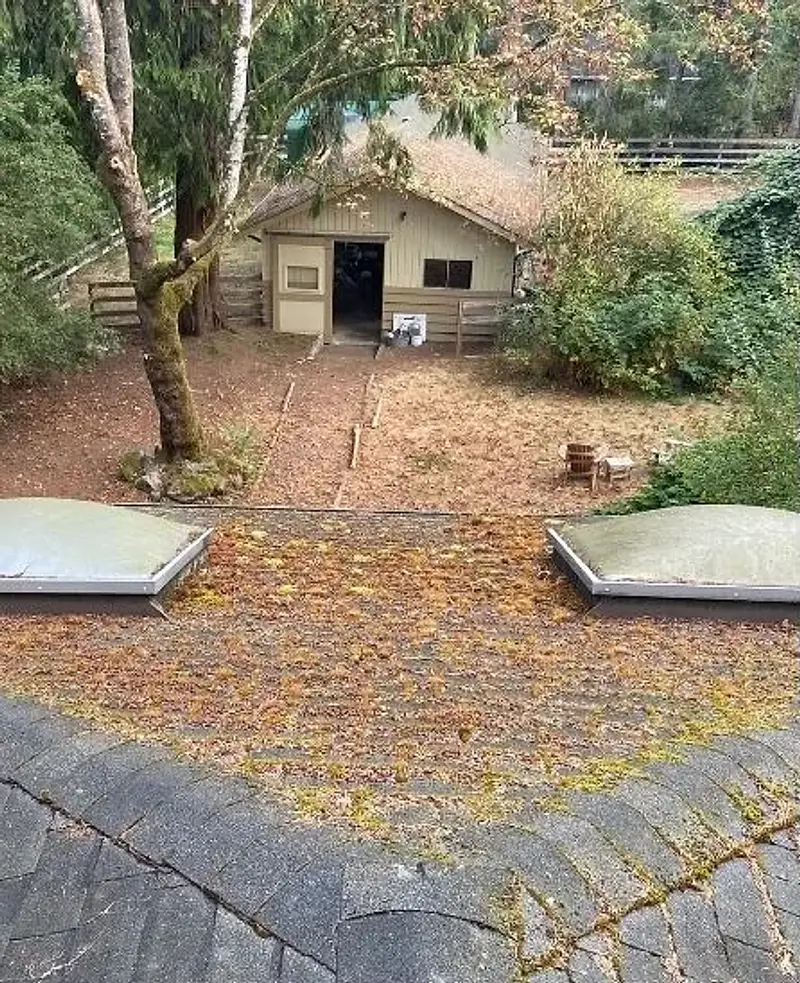
Before
After
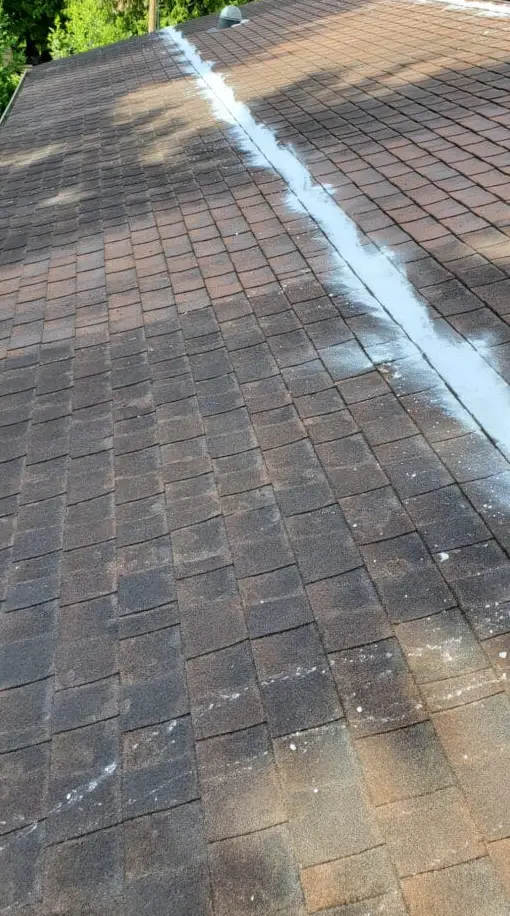
Before
After
Why us
Why customers love our window moss removal
Window moss work is about the frame, the sill and the drain slots, not the glass. This is what each window gets.
- A look at every window from outside, upper floors included
- Moss and grit cleared out of sills, corners and exterior stops
- Sliding window and patio door tracks cleaned and wiped out
- Each weep hole cleared and checked with a splash of water
- No pressure washer pointed at a frame, a seal or the glass edge
- Soft wood, lifting paint and fogged panes pointed out to you
- Debris taken away, sills and decks below left tidy
Google reviews
Our google reviews:
5.0on Google
5out of 5 stars
Fantastic service. Dave did a great job on the gutters
D. K.
Review on Google5out of 5 stars
the most trustworthy and dependable guys I know. Always guaranteed to have an incredible experience.
R. S.
Review on Google5out of 5 stars
Oct 2026
Great job! Very reasonably priced. Extremely timely!
Katie L.
Review on Google
Window moss removal in Nanaimo is mostly frame and sill work. Ask most people where window moss grows and they point at the glass. Glass is the one part of a window that stays fairly clean, because it is smooth, it sheds water and every rain rinses it. The moss that causes damage sits a few centimetres lower, in the frame. It packs into the outside sill, fills the joints between frame and trim, grows along the track a sliding window runs in, and blocks the drain slots along the bottom edge. Those spots are narrow, shaded by the frame itself, and always holding a little grit and damp. On a north wall in Nanaimo they barely dry out between fall and spring.
Why the weep holes matter most
No window keeps every drop of water out of its frame, and none is designed to. Rain driven against the glass works past the outer seal and runs into a channel along the bottom of the frame. From there it is supposed to leave through weep holes: small slots, often with a hinged flap, on the outside face of the bottom rail.
Moss is very good at plugging them. A weep hole is a small, dark opening that rarely dries, exactly what a moss spore needs, and fir needles, dust and old spider web give the moss something to hold onto. Once the slots are closed, rain that gets into the frame stays there. On this part of the island the wet season runs roughly from October into March, so a blocked frame can sit with water in its bottom channel for five months at a stretch.
What standing water does to a window frame
The damage depends on what the window is made of, and around Nanaimo you see all three common types on the same street.
Older houses in neighbourhoods like Harewood and the Old City often still have wood frames, or wood sills under newer inserts. Wood that stays wet loses its paint first, then softens at the bottom corners and along the sill nose. If a screwdriver tip pushes into the sill, it has moved past cleaning and needs a carpenter.
Vinyl is what most newer or re-windowed houses have. It does not rot, but the frame has hollow chambers, and water held in the bottom one works at the edge seal of the double-glazed unit. When that seal goes, the panes fog on the inside and the glass unit has to be replaced.
Aluminum frames, common on older houses and patio doors, cope with water better but run with condensation inside through the cold months. That condensation drains into the same channel the moss has already blocked, the sliding parts gum up, and a door that once glided now takes two hands.
Where we find window moss around Nanaimo
The windows that grow the most are the ones that never get afternoon sun or a breeze. On the slopes below Mount Benson and in the wooded pockets of Departure Bay, houses sit under tall Douglas fir, western red cedar and bigleaf maple, and the windows facing the trees stay shaded most of the year. Ground-floor windows behind a laurel hedge or a rhododendron are another favourite, as are the windows under a carport roof or a deep second-floor deck. Townhouse and strata complexes often have a whole north-facing row of identical frames all going green at the same rate.
Much of the city sits in the Coastal Douglas-fir zone: mild, damp winters with long spells where the temperature hovers above freezing and nothing dries. That is ideal weather for moss in any narrow, sheltered gap, and a window frame is full of them.
How it works
How we clear a window frame
A house with twenty windows is still done one frame at a time. Shaded sides of the house are where we spend longest, since the growth there is thickest.
Walk the outside
We go round every side of the house noting frame material, which windows face north, which sit under a deep eave or a big tree, and which sills already look soft or stained.
Clear the growth
Moss comes out of corners, sill edges and tracks with small detail tools sized to the profile. Water is used sparingly and only at low pressure.
Open each weep hole
Every drain slot is cleared through from the outside, then we pour a little water into the bottom channel and watch it run out. A slot that looks clear at the face can still be packed inside.
Wipe down and report
Tracks and sills are wiped clean so loose grit does not end up under a sash or against a seal, and you hear which frames are sound and which ones want a closer look.
Frame by frame
- You tell us how many windows and which sides.
- The price is agreed before a ladder goes up.
- Sills, tracks and corners come up clean.
- Every weep hole drains again.
Water sitting in the bottom of a window track? Ask us for a free quote.
Window moss removal with small tools and very little water
Frame work is slow and detailed. We clear the moss out with small tools sized to the track or sill profile, then open each weep hole and test it with water. We use a sprayer or a damp cloth to rinse, not a hose aimed at the wall, and we never bring a pressure washer anywhere near a window. Where a sealed unit already looks fogged or the wood is soft, we go lighter still and tell you what we saw.
Upper-floor windows are reached from a ladder set on firm ground, the same way we reach the eaves. If a window is over a sunroom roof or a steep bank and cannot be reached safely, we say so at the quote rather than on the day.
Adding window moss removal to a roof visit
Few people book window frames on their own. The usual pattern is to add them to a roof visit, since the shaded side growing moss on the shingles is nearly always the side growing it on the sills too. If the growth keeps coming back fast, our moss treatment and prevention page covers trimming branches back and timing a follow-up.
We clear window frames across Nanaimo and the nearby towns, including Lantzville and Ladysmith. Tell us roughly how many windows there are, which ones are upstairs and whether any sliding doors stick, and ask for a free quote.
Why choose us
Our approach to window moss removal
Moss work since 2021
Five years of clearing moss off houses around Nanaimo, from roofs and paths down to the narrow parts of a window frame.
Ladders set with care
Upper-floor windows mean ladder work against the wall of your home, so ladders are footed and placed away from plants and frames.
Locally owned
We are a local outfit, and whoever looks at your windows for the quote is part of the crew that comes back to clean them.
Upper floors included
Second-storey frames get the same attention as the ones you can reach from the patio, with the ladder footed on firm ground.
Got questions?
Window moss questions
Is this the same as window washing?
No. Window washing is about the glass. We are working on the frame around it: the sill, the corners, the track the sash runs in and the drain slots at the bottom.
The glass often looks better once the frame is clean, because the green run-off stops streaking down it, but a clear view is not what the visit is for.
What exactly is a weep hole?
It is a small slot, usually with a little plastic flap or cover, along the bottom outside edge of the frame. Rain that gets past the outer seal collects in the bottom channel and is meant to drain out through those slots.
If yours have moss or grit in them, or water still sits in the channel the morning after a downpour, they are not doing their job.
Can I test my own weep holes?
On ground-floor windows, yes. Slide the window open, pour a cup of water slowly into the bottom track and look outside. Water should come out of the slots within a minute or so.
If it pools in the track or seeps out somewhere else, the slots are blocked. Upper-floor windows are where most people call us, because doing the same test from a ladder is not much fun.
Why not just spray the frames with a pressure washer?
Because the jet goes where you do not want water: past the frame seals, into the wall behind the trim and against the edge seal of a double-glazed unit. A frame that was only mossy can end up leaking.
We use small detail tools and a little water at low pressure instead. Higher pressure is kept for the jobs that need it, such as concrete, which has its own page for driveways and sidewalks.
My windows are vinyl. Can they still be damaged?
The vinyl itself will not rot, but the frame is hollow and the sealed glass unit sits in it. Water that cannot drain out of the bottom chamber gets at that edge seal over a few winters, and once it lets go you see a cloudy haze between the panes that no cleaning will shift.
The wood around the window, such as trim boards and the rough opening behind them, can still rot if water is getting into the wall.
Which windows tend to be worst?
North-facing ones, ground-floor windows behind shrubs, anything under a carport or a deep overhang, and windows facing a stand of fir or cedar. Those frames hardly dry between October and March.
On hillside houses, the lower windows on the uphill side often stay damp longest, because the bank beside them blocks the sun and the breeze.
Can this be done on the same visit as my roof?
Yes, and most people book it that way. The ladders are already up, and the shaded side of the house that grows moss on the roof is usually the side growing it on the windows too.
Mention it when you ask for a roof moss removal quote and we will price the windows as a separate line.
Will the moss come back in the frames?
Over time, yes. A shaded frame on this coast collects grit and spores every year. Keeping the weep holes open is what matters most, and a look once a year, ideally in early fall before the rain settles in, keeps them that way.
Window moss removal in Nanaimo and the mid-Island
A blocked weep hole leaves water sitting in the frame all winter. Tell us how many windows have green sills, and we will quote the job for free.