
Nanoose Bay, BC
Roof Moss Removal Nanoose Bay
Open rock and arbutus on the peninsula, tall fir inland. Nanoose Bay roofs grow moss in pockets, so we find the damp faces and soft wash them at low pressure.
Package dealRoof moss + gutter cleaning, one lower priceHave the gutters cleaned on the visit that clears the roof and both jobs are priced as a package. Gutter cleaning details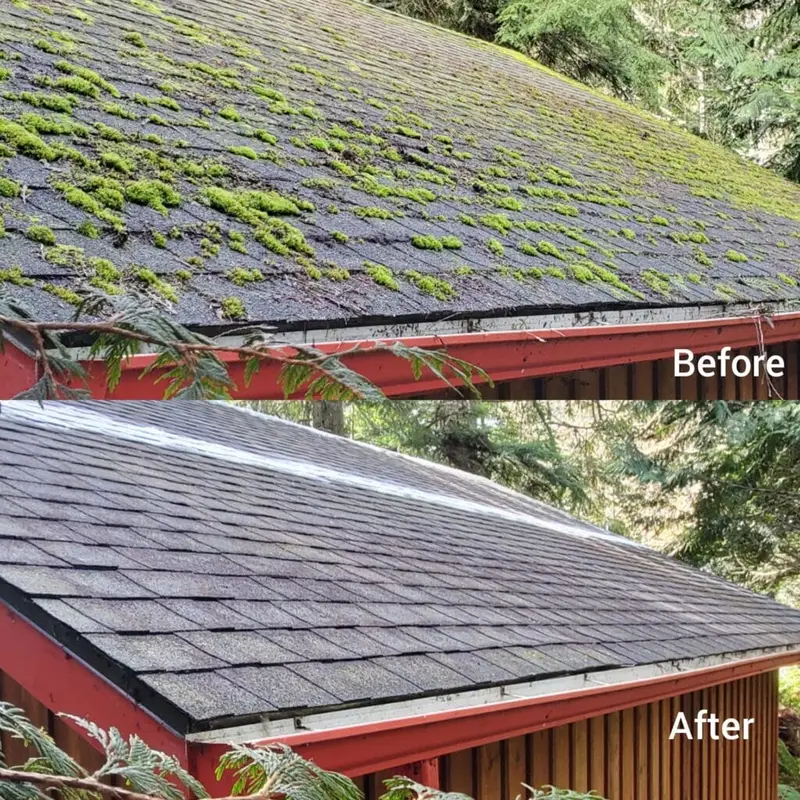
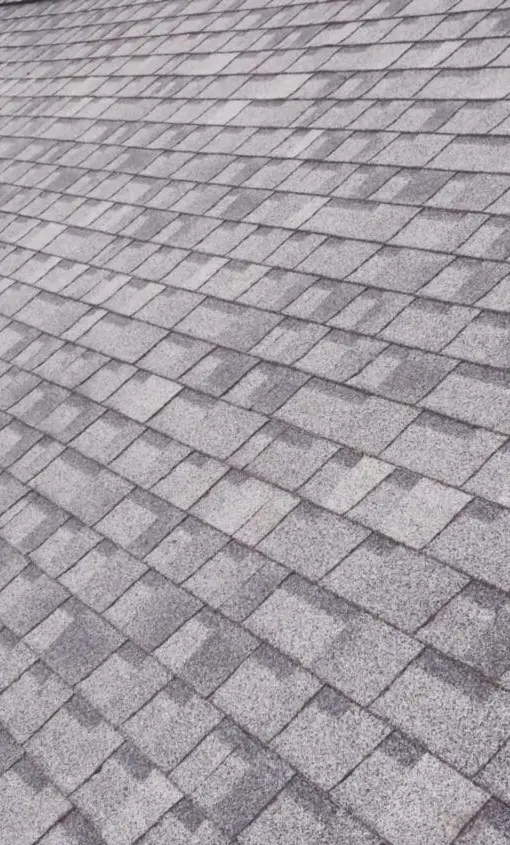
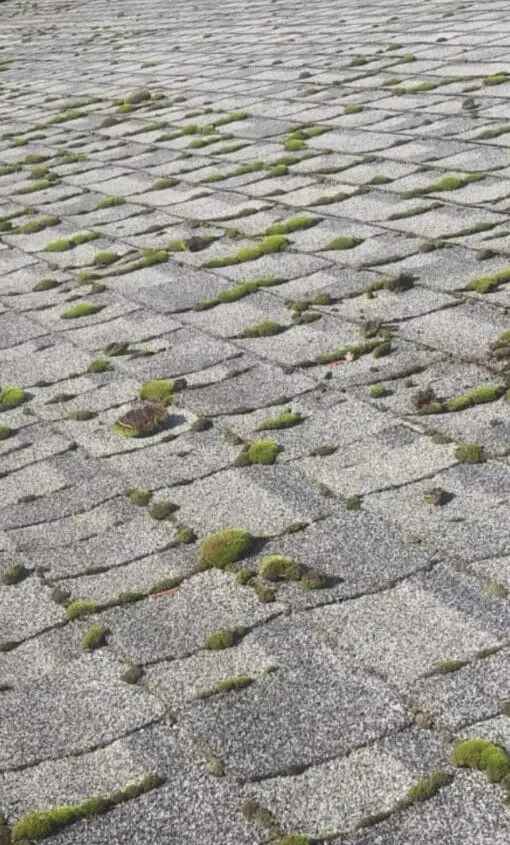
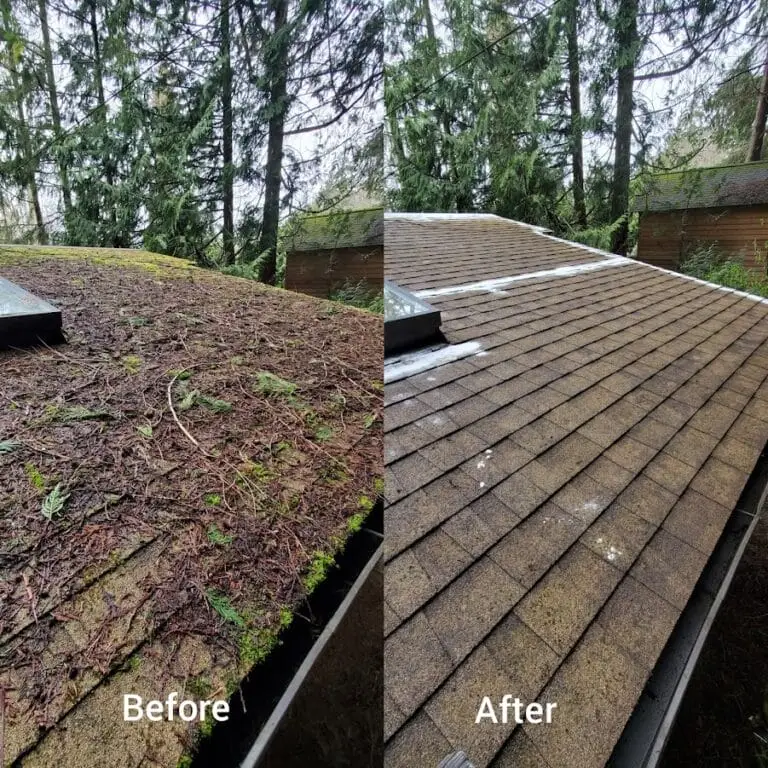
Before
After
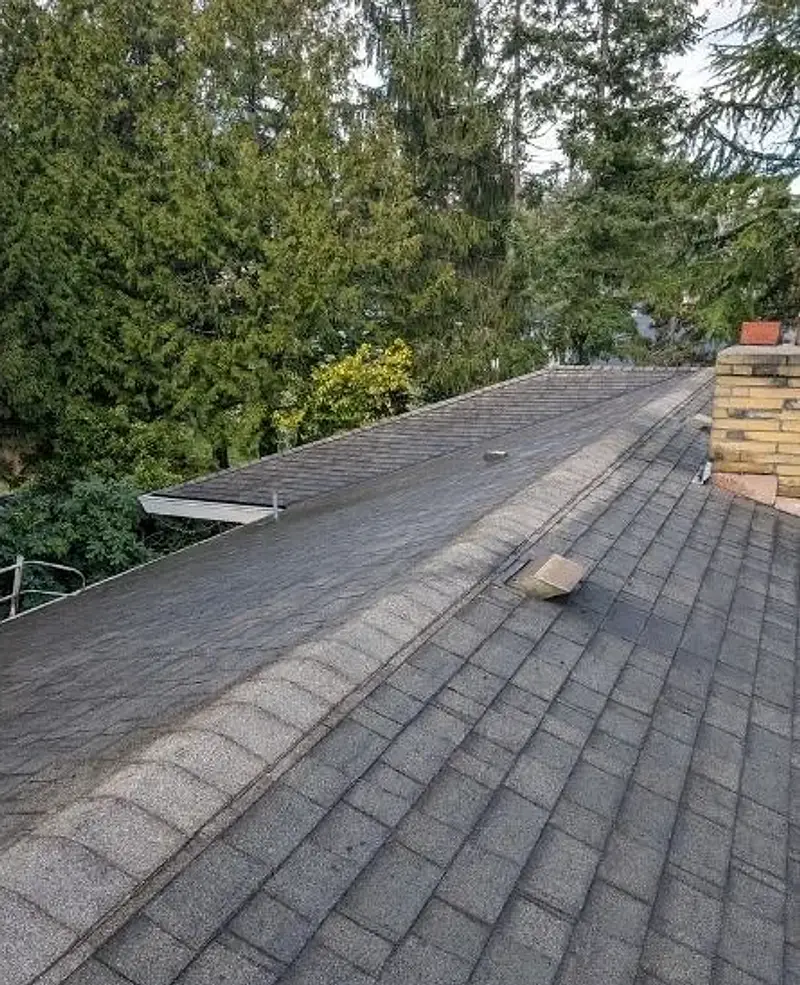
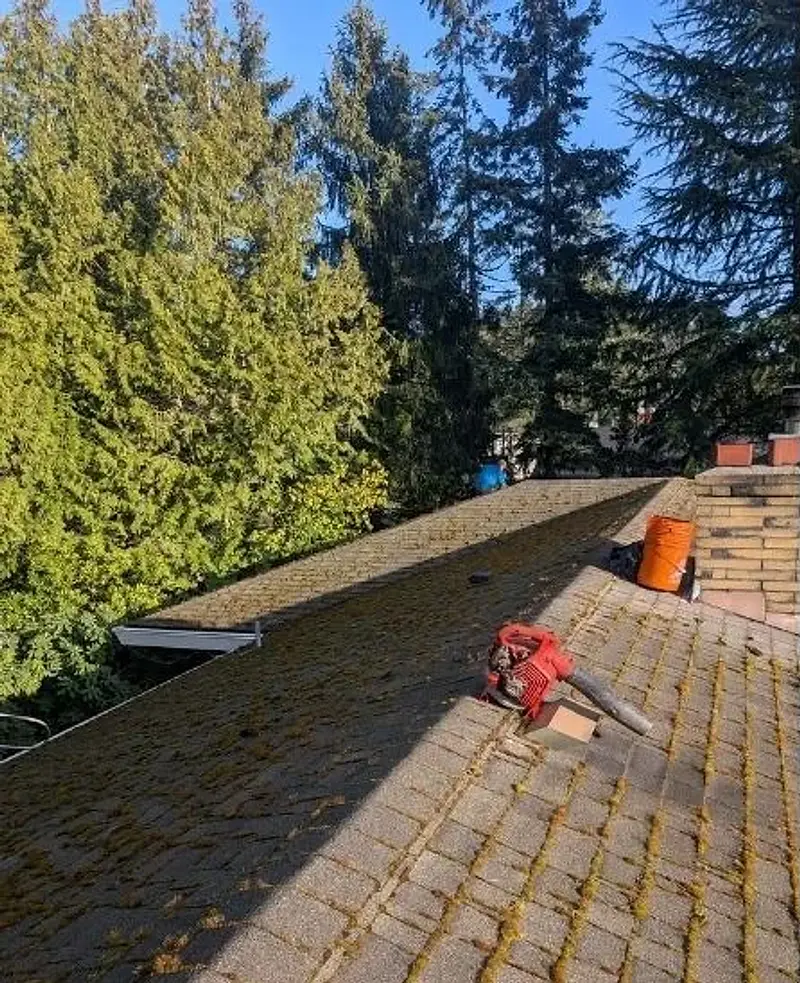
Before
After
Services
Nanoose Bay Roof Moss Removal and Roof Cleaning Services
The drive from our Nanaimo base to Nanoose Bay runs north on the highway past Lantzville, and the crew makes it most weeks. Roof moss removal in Nanoose Bay is rarely a whole-roof job. On the peninsula, where houses sit on open rock among arbutus and Garry oak, the growth keeps to a few shaded faces. In the fir uplands off Northwest Bay Road it can cover a roof from ridge to eave. We quote the roof we find, face by face.
What the work includes:
- Roof moss removal on asphalt shingles, cedar shakes, tile and metal: a low-pressure soft wash that carries the treatment
- Roof cleaning for the lichen spots and dark algae streaks that sunny, water-facing slopes grow in place of moss
- A treatment on the cleared roof, to slow the next round; it comes with every roof job and is priced in from the start
- Gutter cleaning: troughs scooped out, debris bagged, downspouts flushed
- Paths, steps and drives that have gone slick in the shade, through our driveway and sidewalk moss removal service
Detached garages and workshops are worth a mention when you ask for a quote. They sit under the same trees as the house, nobody looks at them, and they are often greener than the main roof. Clearing them while the crew is already on site is simpler than a second trip.
Fairwinds strata councils and property managers can book a group of buildings as one job; the commercial and strata roofs page explains how that is quoted. We have removed moss since 2021.
- Roof Moss Removal
- Roof Cleaning
- Roof Demossing
- Moss Treatment & Prevention
- Driveway & Sidewalk Moss Removal
- Window Moss Removal
- Gutter Cleaning
In Nanoose Bay we clear the faces that need it, wash them gently and leave the dry slopes alone.
The cause
Why Moss Grows on Nanoose Bay Roofs
Nanoose Bay is one of the drier places we work. The peninsula is thin soil over rock, summers go weeks without rain, and from the road many roofs look clean. Walk around to the back of that house and the picture often changes.
The quickest way to predict moss here is to look at what is growing beside the roof.
Arbutus and Garry oak mean dry, open ground: Fairwinds, Schooner Cove, and the points and coves along the shore such as Cottam Point and Madrona Point. Roofs there get sun and wind off the Strait of Georgia. Moss keeps to the places winter light does not reach: a north face, a lower roof tucked under a deck or an upper storey, the side of the house that stands a few metres from a wet rock face. Arbutus adds its own trouble by dropping leaves and strips of bark in summer, which settle in the valleys before the fall rain arrives.
Douglas fir and western red cedar mean the opposite. Up Northwest Bay Road and around Enos Lake the canopy closes over the houses. Needles and cedar fronds land all year, branches drip for hours after a shower, and the whole roof can stay damp from October to April. That is where we find continuous mats instead of scattered cushions.
Sea air plays a smaller part. On fall mornings the water side of a roof can stay beaded with dew well into the day, which favours lichen and dark streaking more than thick moss. We would not overstate it: an open roof near the shore still grows far less than a shaded one inland.
Look at the trees beside a Nanoose Bay house and you can usually say where its moss is before anyone climbs a ladder.
How we work
Removing Moss From a Roof: Our Low-Pressure Soft Wash Method
Because the crew travels up from the Nanaimo area, a Nanoose Bay job is planned before the truck leaves. From the quote visit we already know which faces carry moss, where a ladder can stand on a sloping lot, and what sits under the eaves.
Setup comes first. Ladders are tied off, harnesses go on, and tarps cover the decks, rock gardens and planted beds below the working area. We only work on a roof when it is dry, so the date shifts if the forecast does.
The soft wash goes on next, at low pressure and always down the slope with the lap of the shingles, so no edge has water forced under it. On a house with roofs at two or three levels, the highest is done first, since whatever runs off it lands on the one below. Damp faces in the shade of fir get a fuller pass than the open, rocky side, where moss sits only in pockets.
The moss treatment is mixed into that wash and comes with the job. Asphalt shingles and cedar shakes never get high pressure from us; it knocks granules off one and shreds the surface of the other. Stronger pressure is saved for surfaces built for it, like a concrete drive.
Over the following weeks the treated moss browns and the rain rinses it off. Before we go, the gutters are checked and cleared of what came down with the wash, and decks and paths are rinsed. If you are away, we send a note on what was done and anything the roof showed us.
Dry roof, low pressure, top level first, then the rain does the rest: that is the whole method on a Nanoose Bay house.
The risk
Is Moss Bad for Your Roof? What It Does to Nanoose Bay Shingles
It depends how much there is and where it sits, and in Nanoose Bay that varies more than in most places we work.
A few cushions on an otherwise sunny roof are not urgent. They are worth removing, because each one is a wet spot that grows a little every winter, but they are no cause for alarm. Lichen is slower still. It bonds tightly to the shingle surface, which is why we wash it and do not scrape at it.
The trouble starts when moss gets thick enough to change how water moves. Three places to watch:
- Shingle edges. Moss rooted in the gap between two shingles swells when wet and props up the one above. Wind off the strait can then push rain under that raised edge.
- Valleys. Leaf and bark litter plus moss makes a plug. Water meant to run down the valley spreads sideways beneath the shingles instead.
- Lower roofs. A roof section under a deck or below an upper eave takes runoff from above and little sun. It stays wet longest and usually shows wear first.
On asphalt, a patch that stays wet for years sheds its granules sooner than the dry roof around it. On the cedar shake roofs that some older view homes still carry, the stakes are higher: a shake held damp softens and begins to rot, and moss packed between shakes stops the wood from drying. Metal, common on newer builds and outbuildings, shrugs off most of this, though growth still collects along seams and around fasteners where debris sits.
Under the inland fir, where a mat can run from ridge to eave, all of these happen at once and across the whole roof.
A few cushions are a small job; a thick mat or a plugged valley is the point where moss starts costing a Nanoose Bay roof.
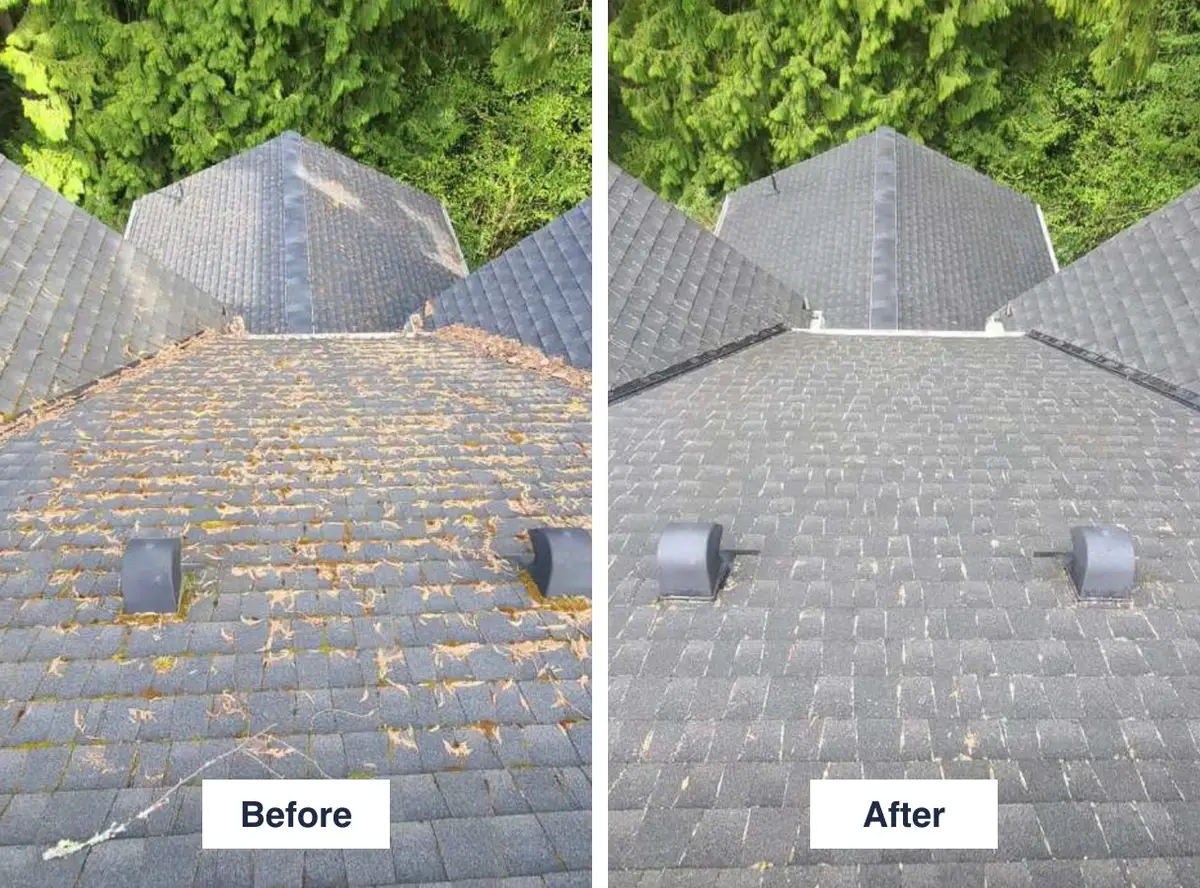
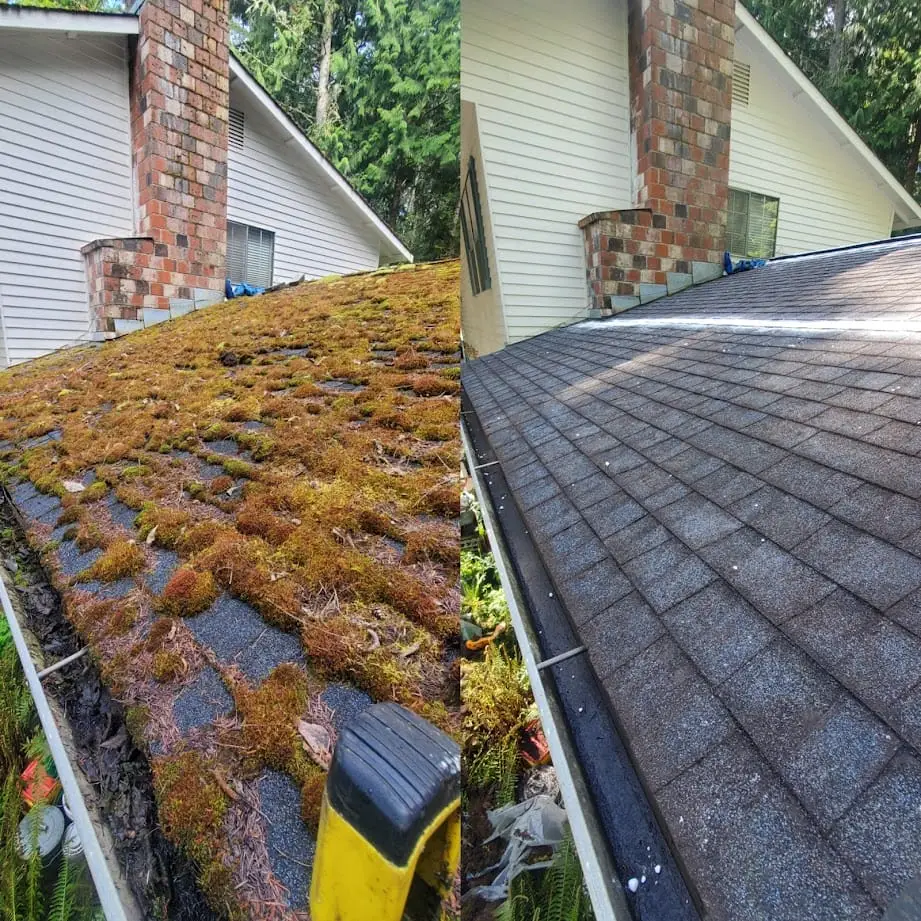
After the clean
Roof Moss Killer and Treatment: Slowing Regrowth in Nanoose Bay
A roof moss killer, in plain terms, is the treatment carried in the soft wash we put on a roof. It kills the moss it soaks into, reaches the fine growth in the shingle texture and slows the next generation. It does not seal a roof against moss, and nothing does.
How much it buys you in Nanoose Bay depends on which kind of lot you have.
On an open, rocky lot, the roof already dries well. Only a few faces grew moss in the first place, so we treat those faces and the valleys and stop there. Regrowth on a roof like this is slow, and a look every spring is usually enough to catch it thin.
On a forested lot inland, the shade and the needle fall carry on exactly as before. Treatment still helps, but expect to repeat it more often, and expect the north side to turn first.
Either way, the treatment goes on a dry roof with dry weather to follow, at low pressure, so it soaks in and does not run into the beds below. We tell you what product is being used before it goes on.
What happens between visits matters as much:
- have arbutus leaves and bark cleared out of the valleys in late summer, before the rain glues them down
- get limbs that rest on or rub against the roof cut back
- keep gutters running so the eaves can dry out
- check the lower roofs from a deck or an upstairs window, since they go first
The moss treatment and prevention page goes through the options in more detail.
Treatment slows moss on a Nanoose Bay roof, and clearing summer litter before the rain slows it further.
Close by
Moss Removal Near Nanoose Bay: Other Areas We Serve
Our crew reaches Nanoose Bay from the south. The highway from Nanaimo passes Lantzville first, a strip of homes under fir and cedar between the road and the shore, and Lantzville roofs are often booked on a Nanoose run for that reason.
Nanoose Bay itself is unincorporated, part of the Regional District of Nanaimo, and it is more spread out than a map suggests. We cover all of it: Fairwinds and Schooner Cove on the peninsula, Beachcomber and the shoreline points, Powder Point, Red Gap near the highway, the slopes around Notch Hill, and the wooded lots along Northwest Bay Road toward Enos Lake.
Carrying on north-west, the next town is Parksville, on flatter ground between the Englishman River and French Creek. Its low ranchers and beachfront streets are a different kind of roof from a Nanoose view home, and we work there regularly, along with Qualicum Beach beyond it.
Inland from Parksville are Errington and Coombs: acreages, tall timber and outbuildings with roofs that seldom get looked at.
Heading back the other way, Nanaimo is where most of our work is, from Hammond Bay and Departure Bay in the north end to Chase River in the south.
If your place is on a side road between two of these, or you are not sure which community you count as, send the address. The answer is nearly always yes, and it saves guessing.
- Lantzville roof moss removal
- Parksville roof moss removal
- Nanaimo roof moss removal
- Errington roof moss removal
Parts of Nanoose Bay we get to: Fairwinds, Schooner Cove, Beachcomber, Red Gap, Powder Point, Notch Hill, Enos Lake area, Northwest Bay Road.
Nanoose Bay sits between Lantzville and Parksville on our regular route north from Nanaimo, and we cover every corner of it.
Prices
Nanoose Bay Roof Moss Removal Prices and What Changes Them
Nanoose Bay roof moss removal: starting as low as $495
| Size of roof | Light growth | Heavy growth |
|---|---|---|
| 2,000 sq ft | About $600 | About $1,000 |
| 3,500 sq ft | About $1,000 | About $1,800 |
Compare that with a new roof: a full tear-off and re-roof on a house commonly runs $15,000 to $30,000 or more. Clearing the moss before it lifts the shingles can add 10 to 15 years to the working life of a roof.
These figures are a guide, not a quote. The size and steepness of the roof, what it is made of, how we reach it and how heavy the moss is all change the price, so every job gets its own free written quote once we have seen the roof.
Package pricing
Book gutter cleaning and roof moss removal for one visit and we take a package discount off the pair. Adding exterior cleaning, such as a mossy driveway, the front walk or window frames, counts toward it too. Concrete can take higher pressure; a roof only ever gets a low-pressure soft wash. The discount is written out line by line on your free quote.
The starting price and the examples in this section are for a typical roof. A Nanoose Bay roof is often not typical, in either direction, so here is what moves the number.
How much of the roof is involved. On open peninsula lots we are frequently quoting two faces and a valley, not the whole roof. That is a smaller job than the footprint of the house suggests. Under the fir inland, the reverse applies: every slope is carrying growth and every slope needs a full soak.
How the roof is laid out. A single-level house with one ridge is quick to set up on. A view home with an upper roof, a lower roof, a garage roof and a covered deck is four setups, and each one takes ladder moves and tie-off time.
The ground around it. Lots here slope, sometimes sharply, and some houses are reached by a steep drive or a flight of stone steps. Where a ladder cannot stand on level ground we need more time and more gear to work safely.
What the roof is made of. Cedar shakes are slow, careful work. Tile and metal each need their own approach. Asphalt shingle is the quickest of the four.
What else is on the list. You will not see the treatment itemized, because it travels with the roof clean at no added charge. Gutter cleaning, a mossy drive or a detached workshop can all go on one visit; those are itemized, and jobs booked together are priced as a package.
For strata buildings we walk the complex with a council member or the manager and give one written quote for the lot.
Every quote is free and in writing, and you have it before any work is booked.
On a Nanoose Bay roof, the number of mossy faces and the number of roof levels move the price more than the size of the house.
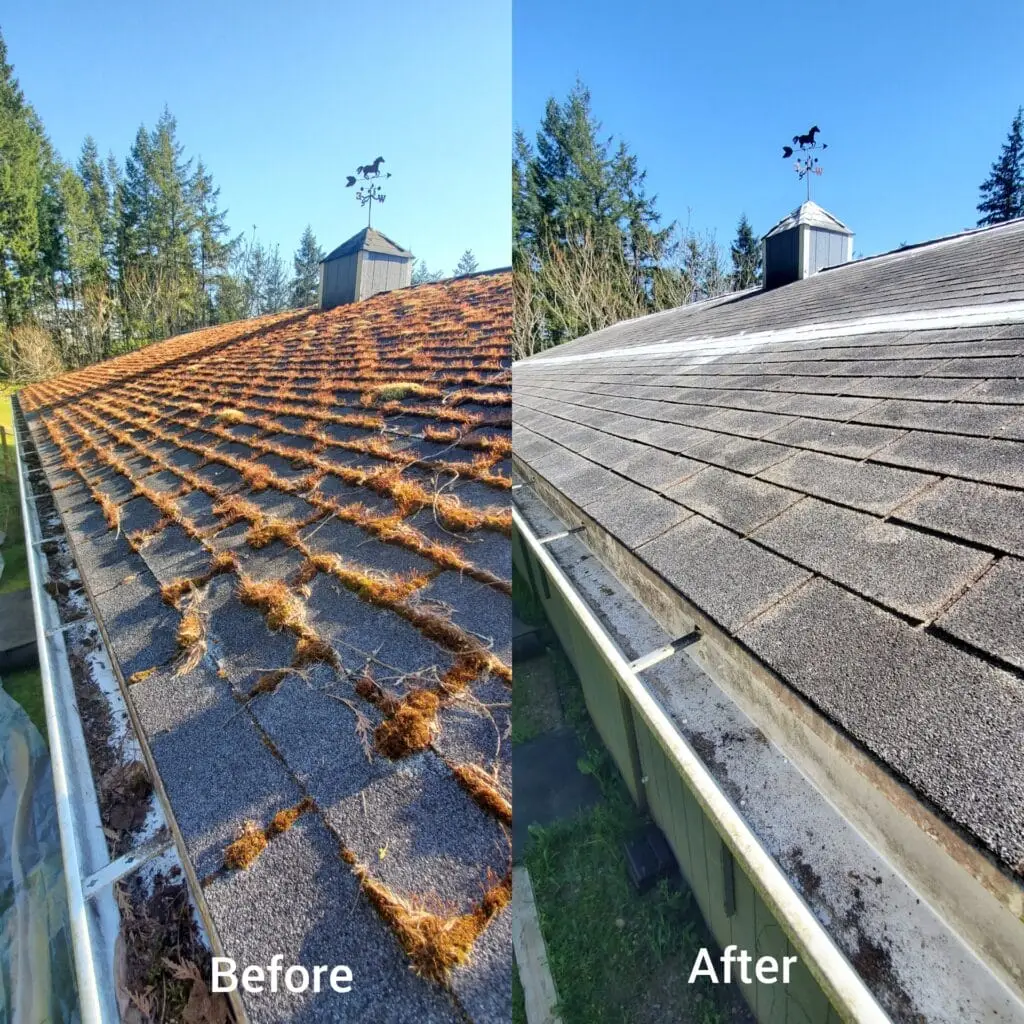
Booking
When to Book Roof Moss Removal in Nanoose Bay
Nanoose Bay has one of the longest dry seasons on our route, and that is the window to aim for.
June to September. Moss has shrunk and dried out for the season. Footing is safe. A treatment put down now gets the dry hours it needs. The one thing to plan around is arbutus: it sheds leaves and bark through the summer, so a visit toward late August or September comes after most of that litter has dropped.
October and November. Still workable in dry spells, and a sensible time for gutter cleaning once the fir and maple have dropped. Treatment gets harder to schedule as the rain becomes steady.
December to February. We work the dry gaps between weather systems, and dates may move. If you can see a thick mat and are worried, ask us to look. Often the honest answer is that it can wait until spring, and we will say so.
March to May. Moss is at its plumpest and easiest to spot. This is a good time to get a quote and hold a place for early summer.
Two local notes. Many owners here are away for part of the year, and nobody needs to be home for roof work. Tell us about gates, alarms on outbuildings and anything fragile under the eaves, and we will report back when the job is done. And because we come up from Nanaimo, we like to line up Nanoose Bay jobs together, so a little notice helps us give you a firm date.
Late summer, after the arbutus has shed and before the fall rain, is the best time for most Nanoose Bay roofs.
Reviews
Reviews From Our Customers
5.0on Google
A roof job is mostly out of sight, so you end up judging a crew by what other customers say about them. The reviews below are from people who have hired us. Trust, dependability and a job well done are the things they keep coming back to.
5out of 5 stars
Oct 2026
Reliable and trustworthy service. Happy to recommend! Thank you.
Angela S.
Review on Google5out of 5 stars
Oct 2026
Great service. My roof looks great
David K.
Review on Google5out of 5 stars
Oct 2026
Some of the most trustworthy and dependable guys I know. Always guaranteed to have an incredible experience, and I would highly recommend them.
Ryan S.
Review on Google
Read how past jobs went, then decide whether we are the crew for your roof.
Get a quote
Get a Free Roof Moss Removal Quote in Nanoose Bay
To quote a Nanoose Bay roof we need the address and a few lines from you: is the lot open rock or under fir, which faces look green, how many roof levels there are, and whether a garage or workshop should be included. Photos taken from a deck or an upstairs window are useful, because they show the lower roofs we cannot see from the road. If you are away, say so, and tell us how to reach the yard.
We come up from Nanaimo to look where needed and send a written price. It costs nothing.
Use the form above, and a free written quote for your roof is the next thing you hear from us.