
Tile and metal
Tile and Metal Roof Moss Removal and Cleaning in Nanaimo
Tile and metal roof moss removal in Nanaimo. Concrete tile soaks up water, clay tile snaps underfoot and metal grows moss at its seams, so each roof gets its own plan first.
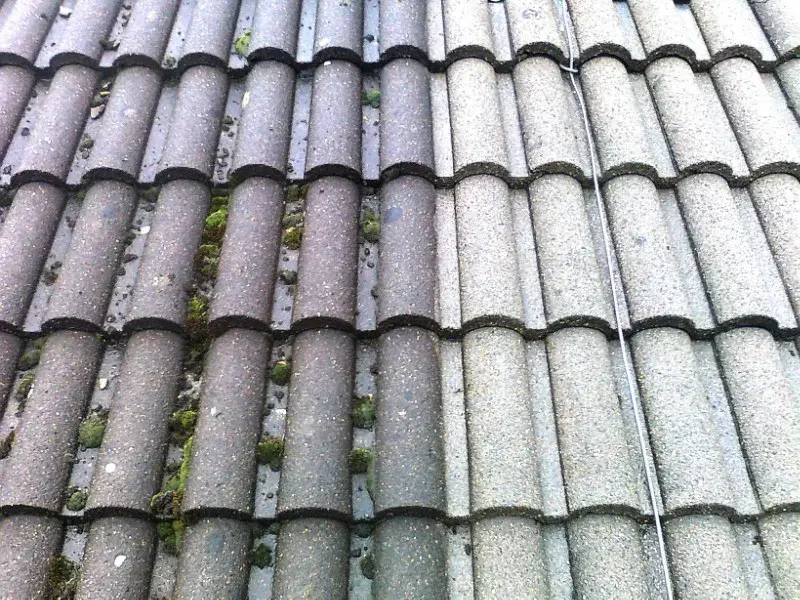
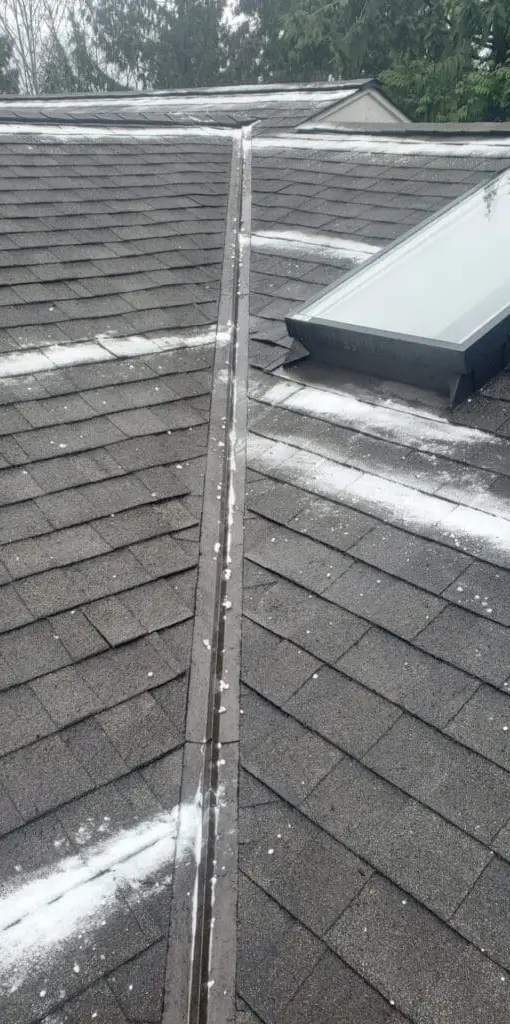
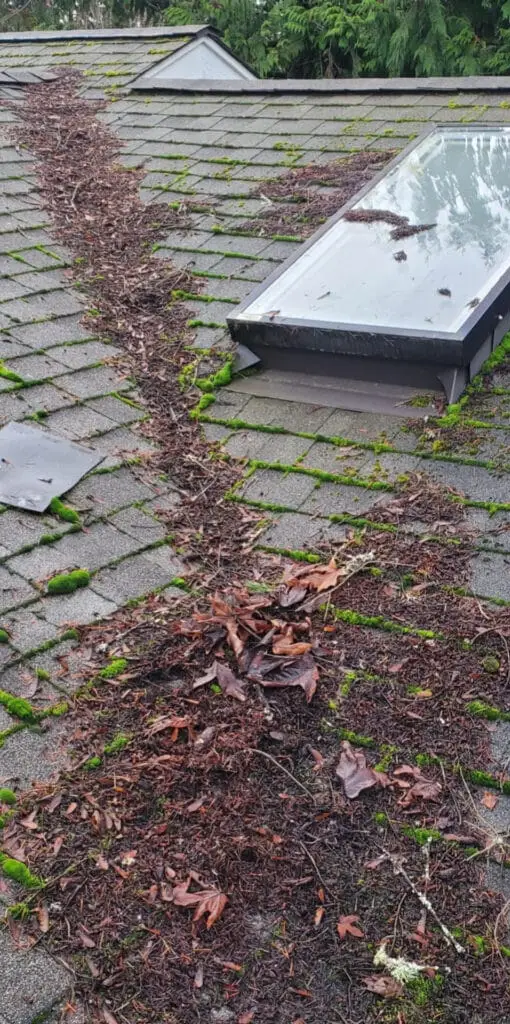
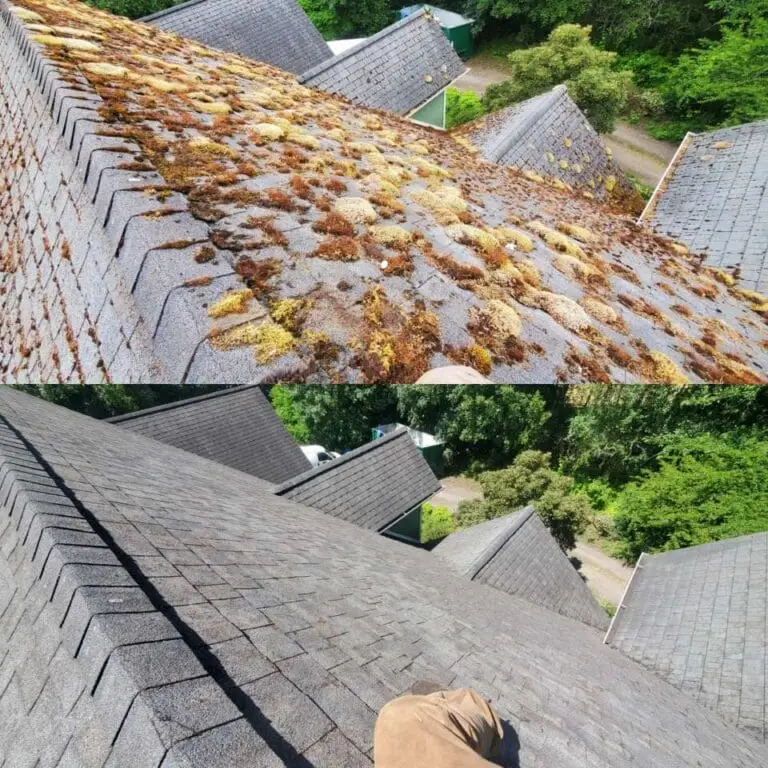
Before
After
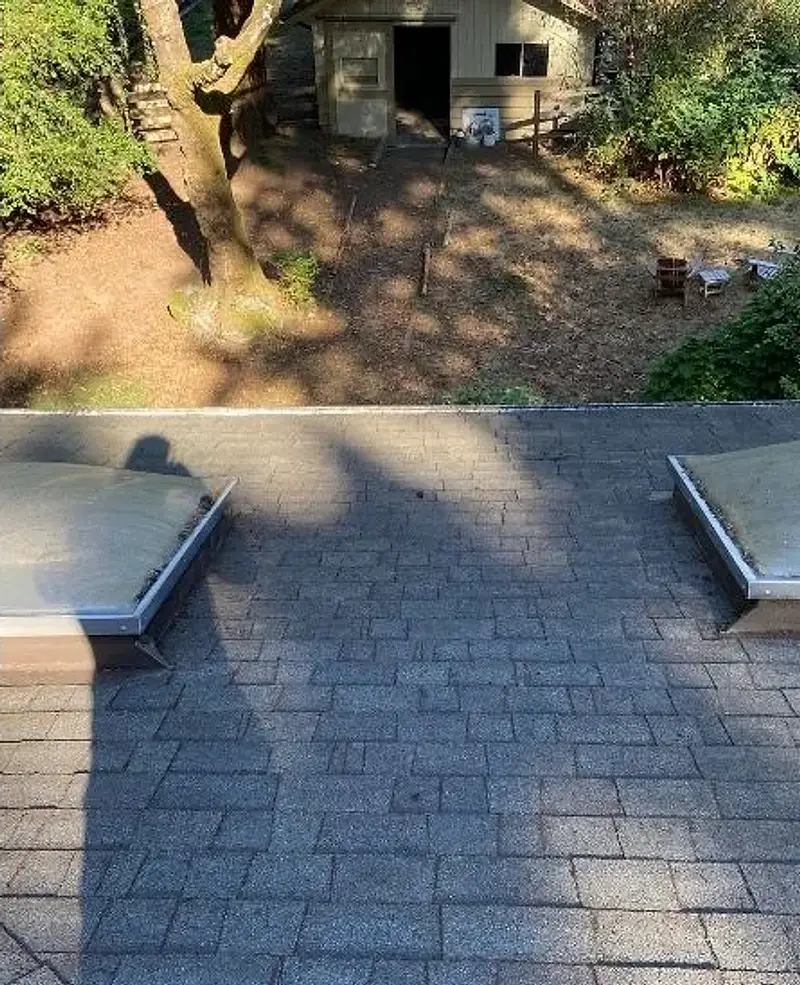
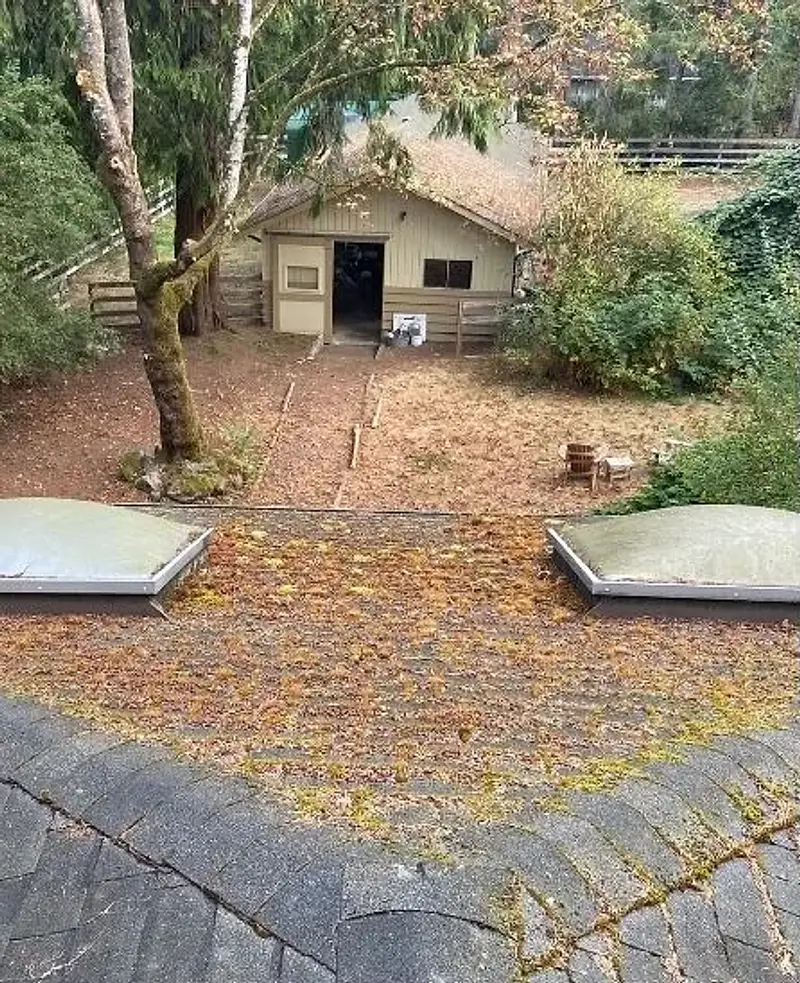
Before
After
Why us
Why customers love our tile and metal roof moss removal
Tile and metal jobs are mostly about where we put our feet and where moss hides at the laps and seams. Here is what the job includes.
- A walking plan for the roof before anyone steps off the ladder
- Tile laps, pans and the channels between rows soaked where moss packs in
- Seams, ribs and fastener rows on metal panels treated along their length
- A low-pressure soft wash over tile and panel faces, never a jet at a lap
- Moss treatment after the clean, included in the price
- Lichen treated so it releases without scraping the finish
- Ridge, hip and valley flashings cleared of packed needles
- Cracked tiles, slipped tiles and loose screws pointed out to you
Before and after
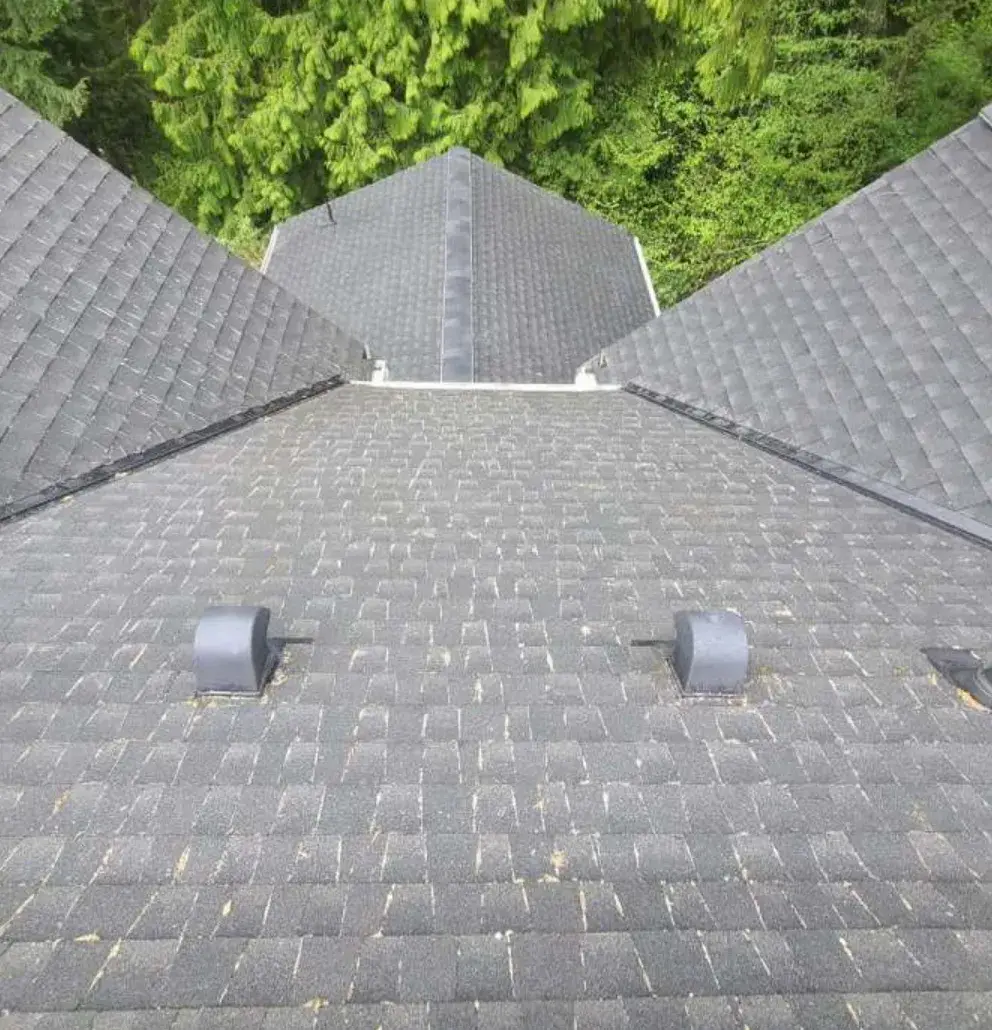
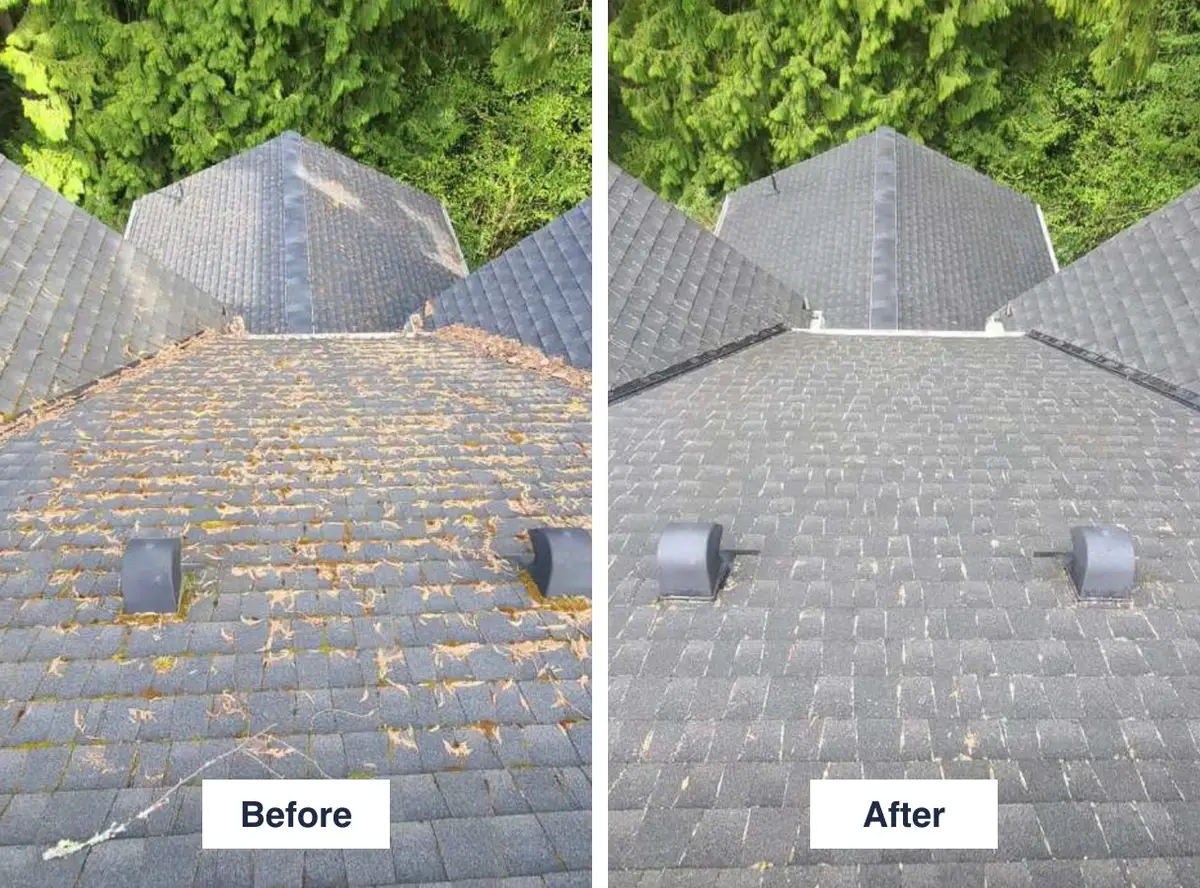
Tile and metal roof moss removal: one roof, before and after
Both photos in a set come from one spot: the first before the job, the second after the treated moss has gone.
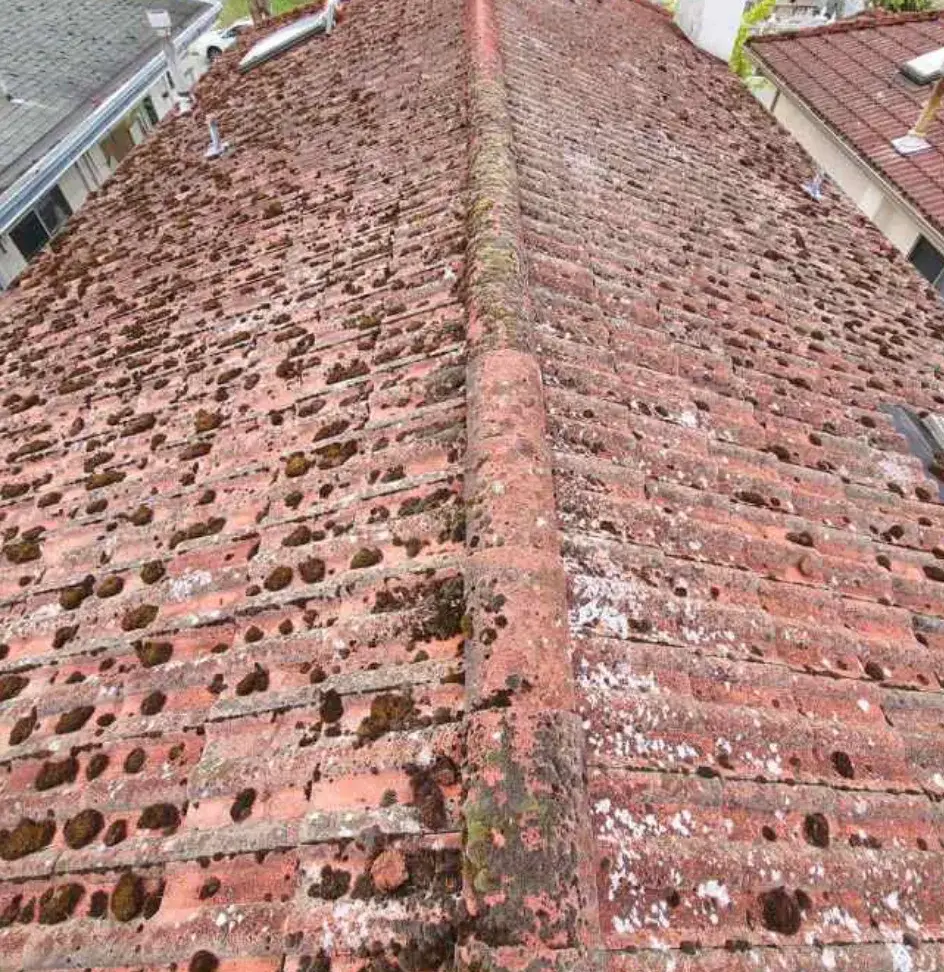
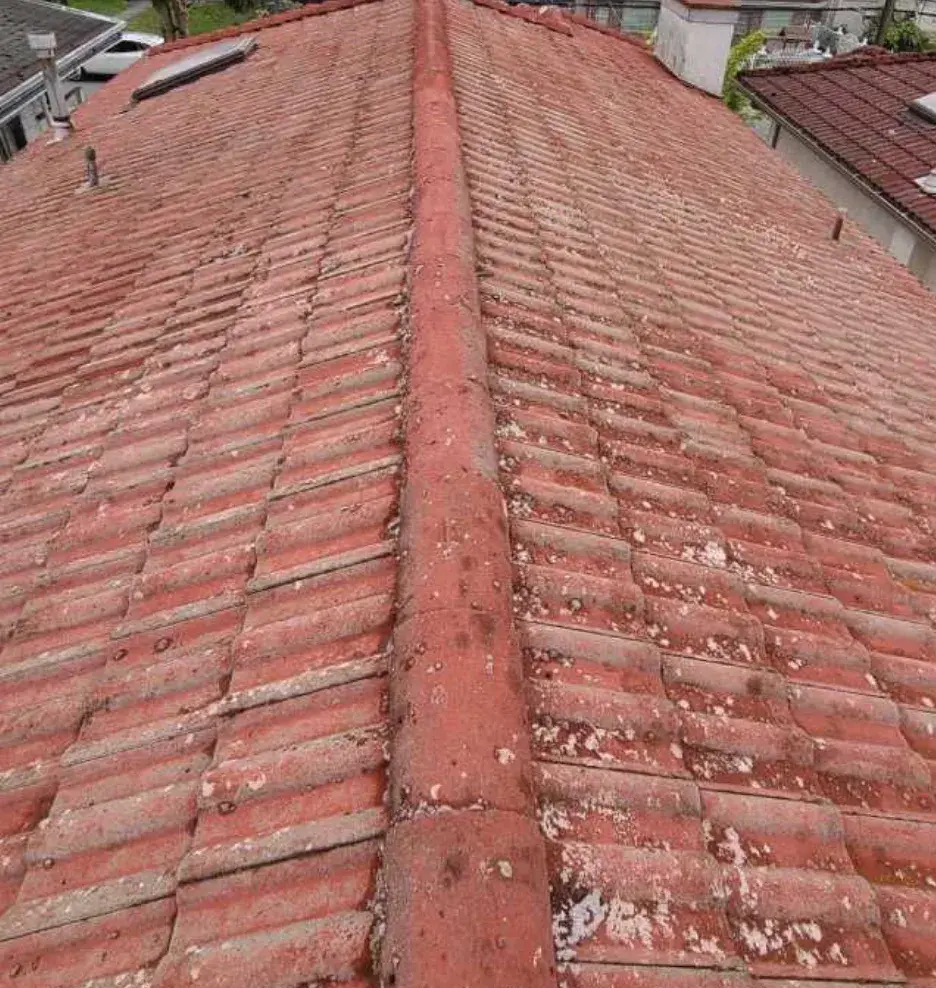
Google reviews
Our google reviews:
5.0on Google
5out of 5 stars
Fantastic service. Dave did a great job on the gutters
D. K.
Review on Google5out of 5 stars
the most trustworthy and dependable guys I know. Always guaranteed to have an incredible experience.
R. S.
Review on Google5out of 5 stars
Oct 2026
Great job! Very reasonably priced. Extremely timely!
Katie L.
Review on Google
Tile and metal roof cleaning and moss removal in Nanaimo is planned one roof at a time. Tile and metal are less common than asphalt around Nanaimo, but they turn up across the area: concrete tile on some 1990s and 2000s homes in North Nanaimo and Nanoose Bay, and metal on newer builds, cabins near the water, and the houses, shops and barns on acreages in Errington and Coombs. Both last a long time. Neither is moss-proof, and each has its own way of being damaged by careless removal.
Moss on concrete tile roofs: porous and heavy
A concrete tile is made of sand and cement, and it is more porous than it looks. Its slightly rough face holds water and gives moss roots something to grip, so growth on an older concrete tile roof is often thicker than the same shade would produce on metal. Once the factory coating has weathered off, the bare concrete stays damp even longer.
The face of the tile does not mind moss much. The trouble is in the laps, where one tile sits over the next, and the channels where rows meet. Those are drainage paths. Packed with moss and fir needles, they hold water and back it up under the tiles onto the underlay, which is the layer actually keeping the house dry.
Clay tile: hard but brittle
Clay tile is denser and sheds water better than concrete, but it is brittle. A clay tile that takes a boot in the wrong place breaks, and the break may not show until water finds it. On clay we keep foot traffic to a minimum and reach as much as we can from ladders and the eaves.
How it works
How a tile or metal roof job is planned
On these roofs the walking plan comes before anything else, and wet metal is slippery, so we only go up on dry days.
Material and pitch
Concrete tile, clay tile or metal panels, and how steep the roof is. Mention any shop or barn roofs on the lot so they can be priced separately.
A walking plan from the ladder
Before anyone steps off the ladder we decide where feet can land: tile edges over the batten, seams and purlin lines on metal. Parts too risky to walk are reached from ladders and the eave, and we tell you at the quote.
Laps, seams and valleys
A low-pressure soft wash goes downhill over the faces and into the laps, channels, seams and screw rows. Lichen is treated and left to loosen over the following months, so the finish stays on.
Cracks and screws noted
Cracked or slipped tiles and loose screws are pointed out to you, and we say which breaks were already there: an old crack is dirty along its edge.
Briefly
- A plan for every step on the roof.
- Low pressure at every lap and seam.
- Old damage pointed out to you.
Moss along the seams or packed in the tile laps? Tell us the material and ask for a free quote.
Metal roof moss removal: seams, screws and slippery footing
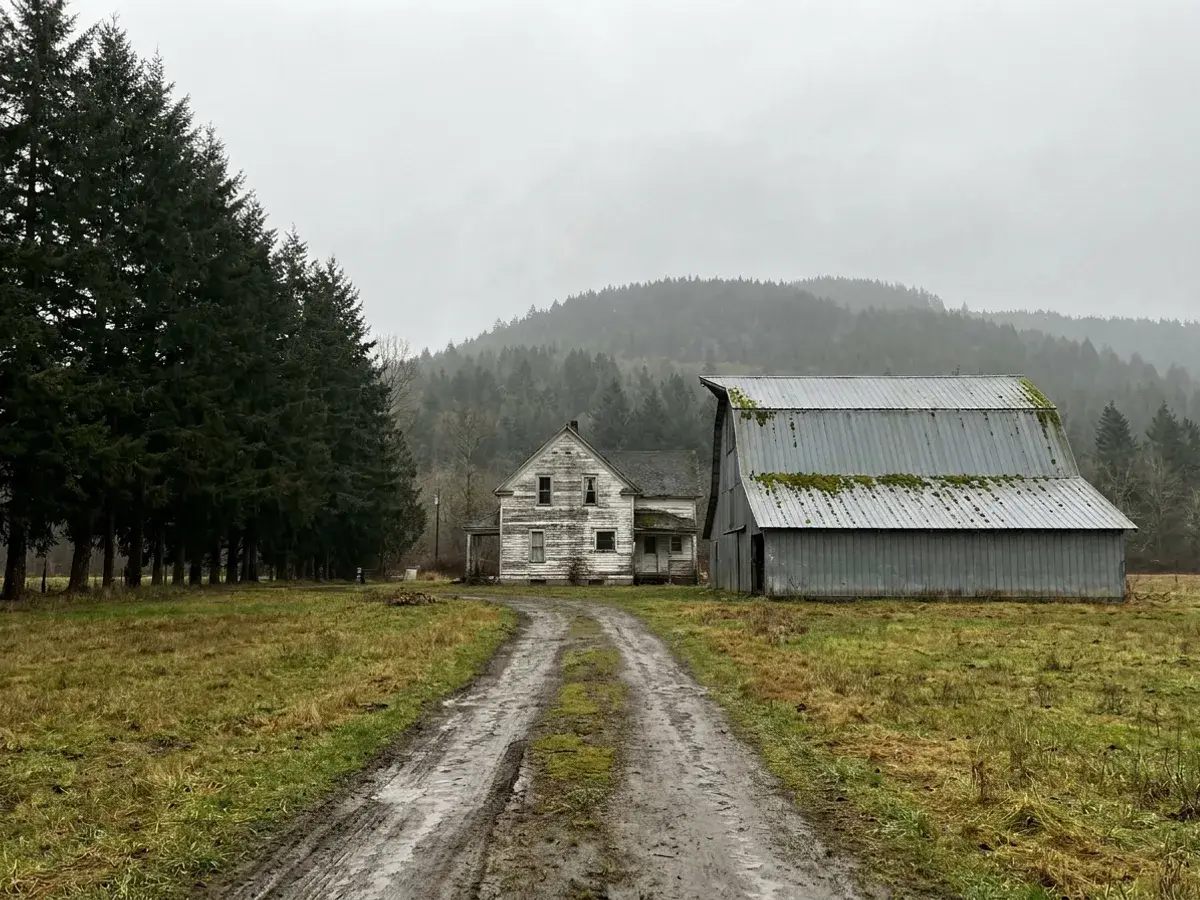
Metal panels shed rain fast, so moss on metal seldom covers the open face. It settles where water and debris linger: along the standing seams or ribs, at the horizontal laps where one panel overlaps another, around the rows of exposed screws on screw-down panels, and on the uphill side of chimneys and skylights. Over time that trapped damp wears on the rubber washers under each screw head and on the paint.
Lichen is common on metal too, especially on roofs near the water. It forms grey, green or yellow crusts that grip the coating tightly. Scraping lichen off a painted panel would take the paint with it, so we never scrape; we treat it and let it loosen over the following months.
Metal also changes how we move. A moss-covered or dewy panel is slippery, so we only go up on dry days, we keep to the seams and purlin lines where the panel is supported, and on steeper pitches we work from ladders and safety lines rather than walking the slope.
Valleys, flashings and roof edges
On both tile and metal, the metal flashings in the valleys and around chimneys collect a surprising amount of debris. Fir needles slide down the panels or tiles, stop at the flashing, and moss grows into the mat. On a tile roof that mat can lift water over the edge of the valley tray. On a metal roof it sits against the coating for months. The soft wash is worked along each of them, and we check that water can run the full length of each valley to the eave.
The work
Tile and metal roof moss removal photos from our jobs
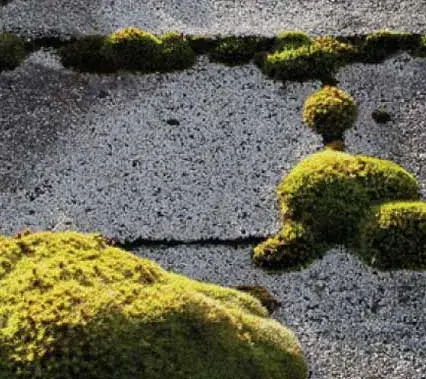
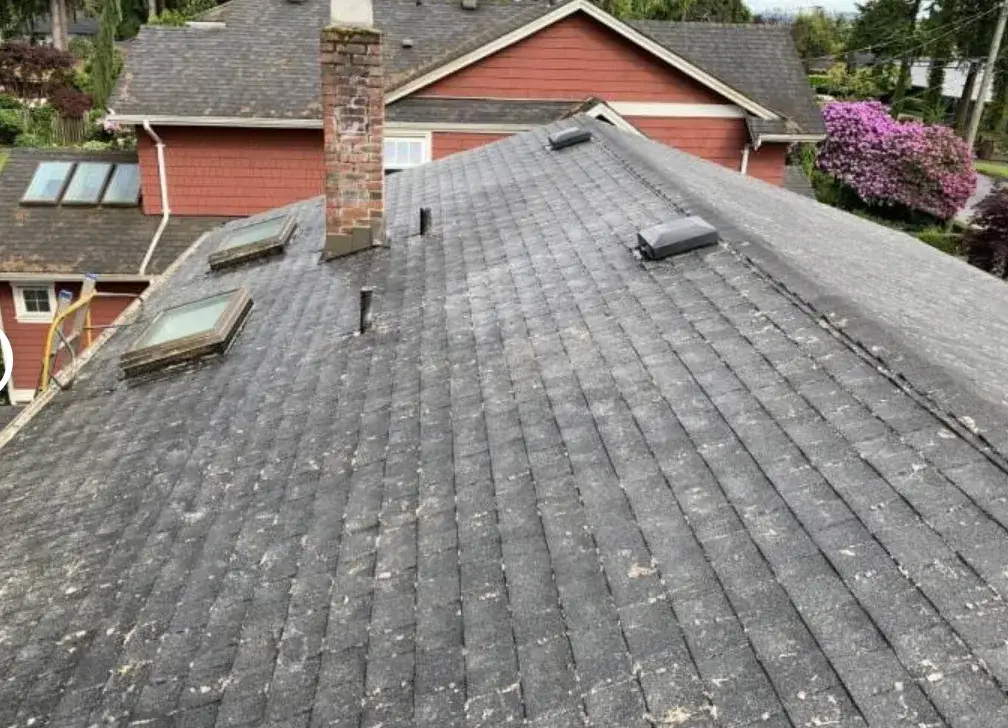
Tile and metal roof cleaning: same tools, different plan
On every one of these roofs the moss is treated with a low-pressure soft wash worked downhill, the moss treatment is part of the job, and the dead growth lets go over the following weeks. High pressure goes nowhere on a tile or metal roof, because at every lap and seam it drives water exactly where these roofs cannot let it go. What changes is where we stand, where we start and which parts we treat rather than clean. The day itself follows our roof demossing routine. For lichen and streaking across a whole roof rather than moss in the joints, see roof cleaning. Tell us the material and the pitch when you ask for a quote, and we will plan from there.
Why choose us
Our approach to tile and metal roof moss removal
We plan the footing
On tile, where a foot lands decides whether a tile survives. We work that out from the ladder before going up.
Finishes left intact
Painted steel and coated tile get a low-pressure soft wash and nothing harder. Scratches let rust and weather in.
Straight about old breaks
We tell you which cracks were there when we arrived. An old break is dirty along the edge; a new one is not.
Treatment in the same wash
The moss treatment rides in the soft wash itself, so tile and metal roofs get it without a second pass over the surface.
Got questions?
Tile and metal roof questions
Can you walk on a concrete tile roof without breaking tiles?
Mostly, if the weight goes in the right spot. On concrete tile that is the lower part of each tile, where it rests on the one beneath and the batten under it. Stepping on the unsupported middle is how tiles crack.
Where a stretch looks too risky, we reach it from a ladder or the eave instead.
What about clay tile?
Clay is harder and more brittle than concrete and far less forgiving. On many clay roofs we avoid walking the field of the roof at all and work from ladders and the edges.
If part of the roof cannot be reached safely without risking tiles, we tell you at the quote.
There are grey and yellow crusty patches on my metal roof. Is that moss?
Those are almost certainly lichen. They grow slowly, grip the surface tightly and do not hold water the way moss does.
We treat lichen and let it release over time rather than scraping it, because scraping would take the paint off with it.
Does moss actually damage a metal roof?
Not by lifting it, the way it lifts shingles. The harm is slower: moss and needles hold water along seams and screw rows, which wears on the washers and the coating, and it can dam water at laps.
Clearing those lines is most of the work on a metal roof.
Do zinc strips work on tile and metal roofs?
They can help on tile. On metal, the panel itself already sheds water quickly, so regrowth tends to be lighter anyway. Mixing certain metals can cause corrosion, so we check what your roof is made of before suggesting anything on our treatment and prevention page.
Will you clean my shop or barn roof as well as the house?
Yes. Many rural properties have a metal-roofed shop, barn or carport beside the house. List each building when you ask for a quote and we will price them separately.
Tile and metal roof moss removal in Nanaimo and the mid-Island
Tell us whether the roof is concrete tile, clay tile or metal, and roughly how steep it is, and we will plan the visit and send a free quote.