
Ladysmith, BC
Roof Moss Removal Ladysmith
A hillside town above a sheltered harbour, with early shade and damp marine air. We check each Ladysmith roof, then treat the moss with a low-pressure soft wash.
Package dealRoof moss + gutter cleaning, one lower priceHave the gutters cleaned on the visit that clears the roof and both jobs are priced as a package. Gutter cleaning details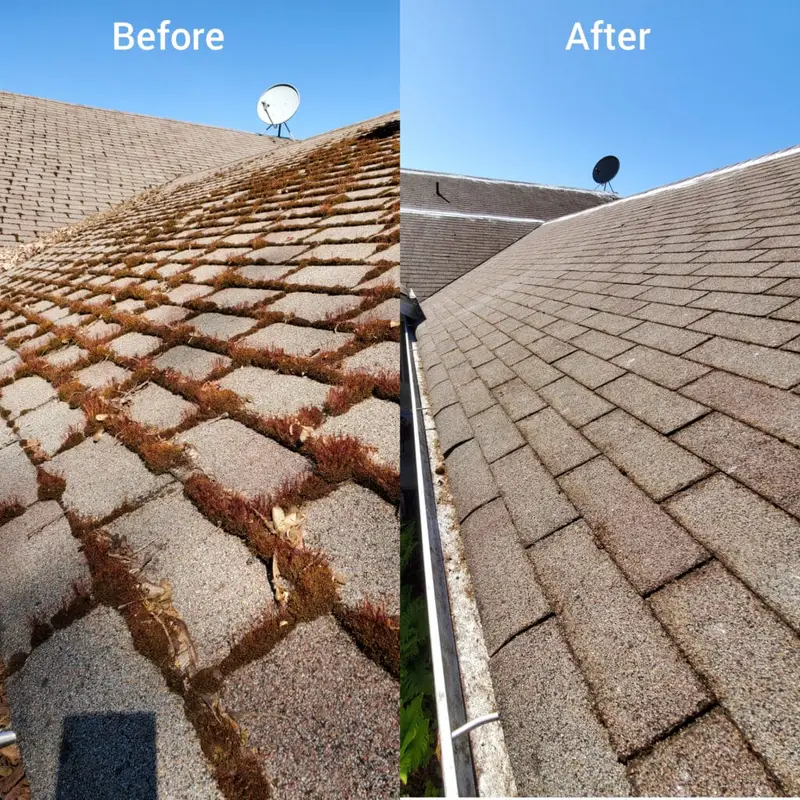
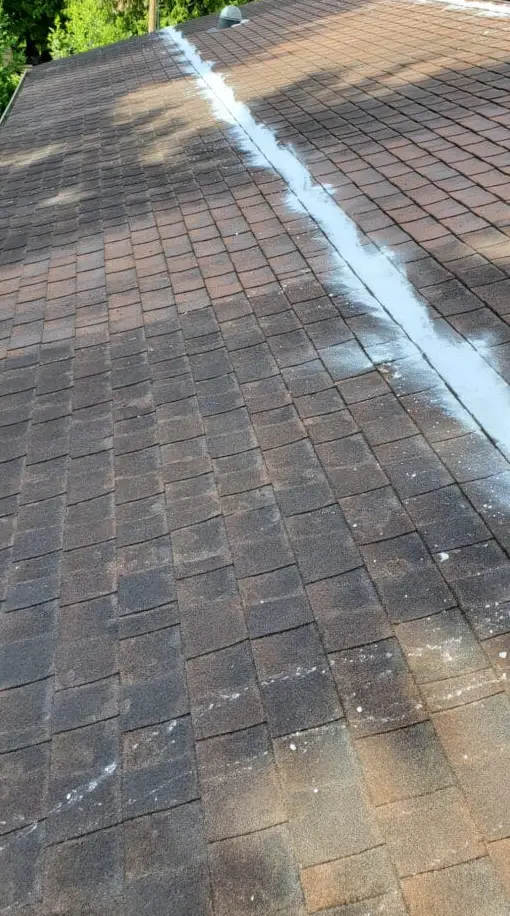
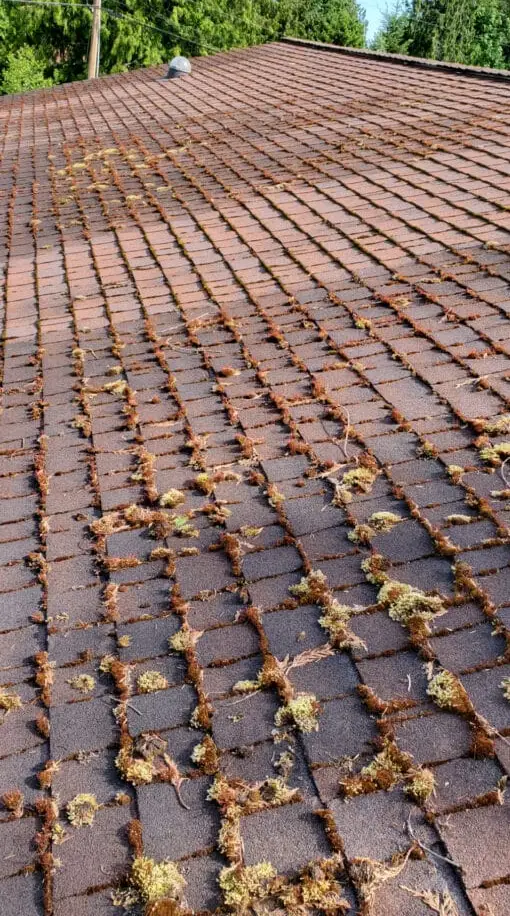
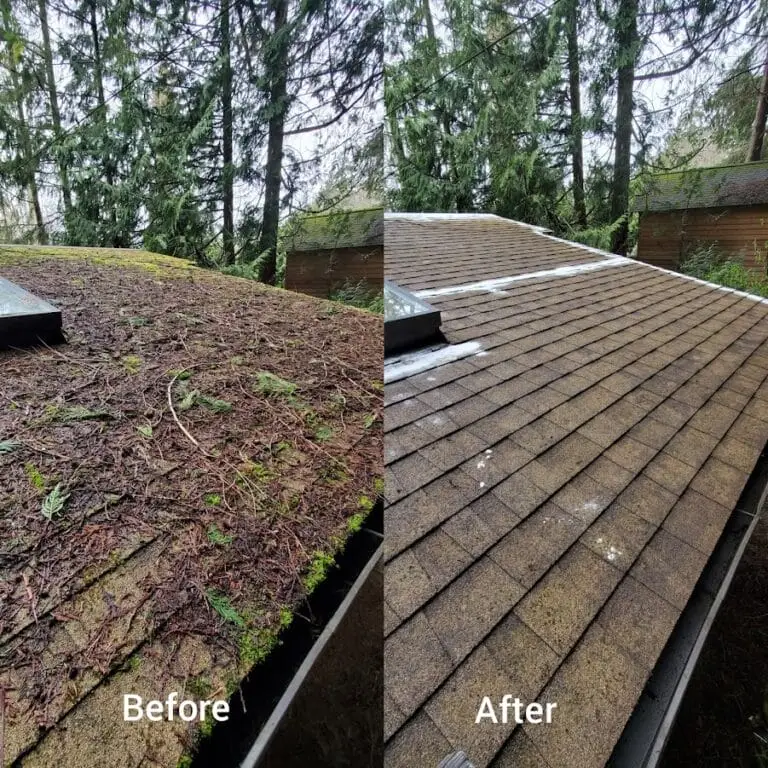
Before
After
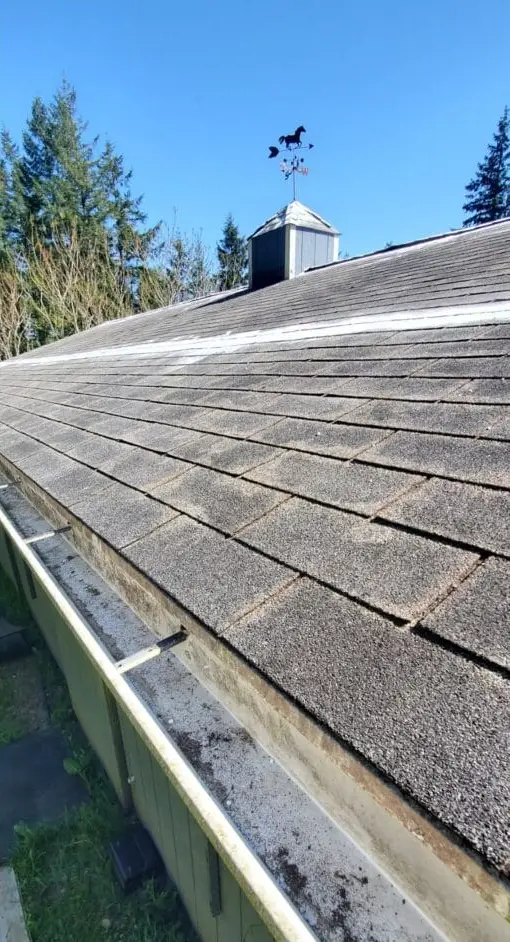
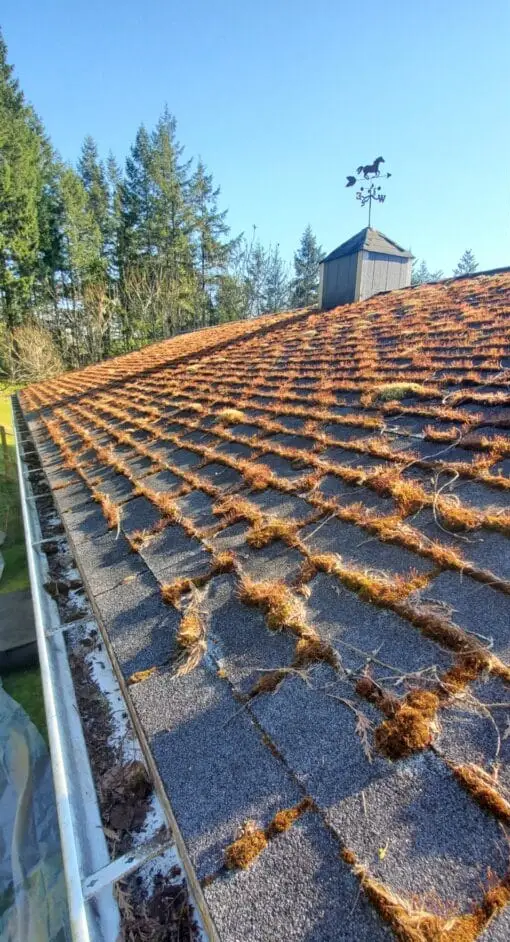
Before
After
Services
Ladysmith Roof Moss Removal and Roof Cleaning Services
Ladysmith climbs a hillside above its harbour, and that slope decides how a roof job here is planned. Nanaimo Moss Removal drives down from Nanaimo for roof moss removal in Ladysmith through the whole year, and has done since 2021. The work takes in the older houses near First Avenue, the streets above Transfer Beach, and the newer homes higher up and out toward Holland Creek.
On a typical house we look first, then clean. Older roofing gets checked for brittle, cracked or curling shingles before anyone puts weight on it. Sound sections get a low-pressure soft wash that carries the moss treatment. We keep high pressure away from shingles and shakes entirely. If a section is too worn to work on, we leave it, photograph it and show you.
Beyond the main roof, the jobs we are asked for in town tend to be these:
- roof demossing of a single bad slope, often the one facing up the hill
- lichen and black streak removal on shingles near the water, under roof cleaning
- strata, rental and downtown building roofs, covered on our commercial and strata page
- window moss removal on sills and sliding tracks on the shaded walls
- gutter cleaning, which is hard to do yourself on a tall downhill wall
Each Ladysmith roof we clear is finished with a treatment to slow regrowth, and the roof price already covers it.
A single house in Ladysmith is booked no differently from one up the highway.
- Roof Moss Removal
- Roof Cleaning
- Roof Demossing
- Moss Treatment & Prevention
- Driveway & Sidewalk Moss Removal
- Window Moss Removal
- Gutter Cleaning
Whether the roofing is recent or has seen many winters, we look it over first and only clean what it can take.
The cause
Why Moss Grows on Ladysmith Roofs
Ladysmith was laid out around 1900 on a hillside that looks east across the harbour. That one fact explains most of the moss in town.
An east-facing slope gets the day's first light and loses it early. In December and January the sun stays low, and on many streets it drops behind the hill and the trees along its top well before the afternoon ends. A roof may see a few hours of weak morning sun and then nothing until the next clear day. Shingles that are wet at noon are often still wet at dusk.
The hill also changes which side of a house is worst. On flat ground it is usually the north face. Here the pitch that looks up the hill is often the greener one, because the slope and whatever stands on it block the light all winter. You will also see roofs that are clean near the ridge and green across the bottom third. That band is shade thrown by a taller house or a row of trees on the next street up.
Then there is the harbour. On cool mornings marine air settles over the lower streets near Transfer Beach and the waterfront. Fog and dew alone keep a roof damp, so moss goes on growing through a week with no rain.
The inland edge of town has a third cause. Toward Holland Creek, big Douglas fir and western red cedar stand close to the houses. They shade roofs all year and drop needles into the valleys, where the litter stays wet.
In Ladysmith, early shade from the hill and damp air from the harbour keep roofs wet long after the rain has stopped.
How we work
Removing Moss From a Roof: Our Low-Pressure Soft Wash Method
In a hillside town the method starts before anyone touches the roof. Many Ladysmith houses are one storey at the street and two or more at the back, and side yards can be narrow. So the first job is working out where each ladder can stand on firm, level ground and how the crew will tie off on the tall side. That is settled for every face of the house before the climb.
Next comes a check of the roofing itself. We look for cracked, curled or brittle shingles and test how the surface takes weight. Sections that fail that check are left alone and photographed for you.
Then the roof gets its soft wash. It goes on at low pressure, from the ridge downward, so the water runs with the shingles and never against their edges. How much goes on is set slope by slope: the lower third of a roof, where shade from uphill often leaves the heaviest band, gets the fullest soaking. The moss treatment is part of that same wash and part of the price.
Under no circumstances do we use high pressure on asphalt shingles or cedar shakes. Lichen is handled just as gently. It grips harder than moss, and forcing it off takes the shingle surface with it, so it is treated and the weather releases it over the following months. Moss goes the same way, only sooner: it browns within weeks and the rain carries it down.
Wash water and grit land on tarps, which on a steep lot can mean a few trips up the stairs to clear them. The gutters are checked and cleared of what came down, and we go over the result with you.
Plan the access, check the roof, then one low-pressure soft wash: on a Ladysmith hillside the order matters as much as the method.
The risk
Is Moss Bad for Your Roof? What It Does to Ladysmith Shingles
A common question in Ladysmith is whether an old house can stand to have its roof cleaned. The better question is what the moss is doing while it stays up there.
Start with the fact that the age of the house is not the age of the roof. Most of the early homes near downtown have been reroofed at least once. What matters is the shingles on it now, and moss treats them alike on every street.
It holds water. A patch of moss stays soaked long after bare shingle has dried, and in a town where harbour damp already slows drying, that wet period can run for most of the winter. Shingles kept wet shed their granules sooner and turn brittle.
It lifts. Moss rooted between two rows swells as it grows and tips up the edge of the row above. Once the edge is raised, wind can catch it and rain can run under it.
It blocks. Needles and moss pack into valleys and behind chimneys, and water that should drain straight off is held or turned sideways.
Lichen and black algae streaks are common on older roofs near the water. Algae is mostly a matter of looks. Lichen is tougher. It bonds to the granules, and pulling it off dry takes them with it.
On the low-slope and parapet roofs of buildings along First Avenue, moss can build for years out of sight. Water that pools around it is the concern there.
A green roof also gets noticed. Buyers see it from the curb, and a home inspector will usually write it up.
Moss wears a roof by keeping it wet, lifting shingle edges and blocking drainage, and an older Ladysmith roof has less margin for all three.
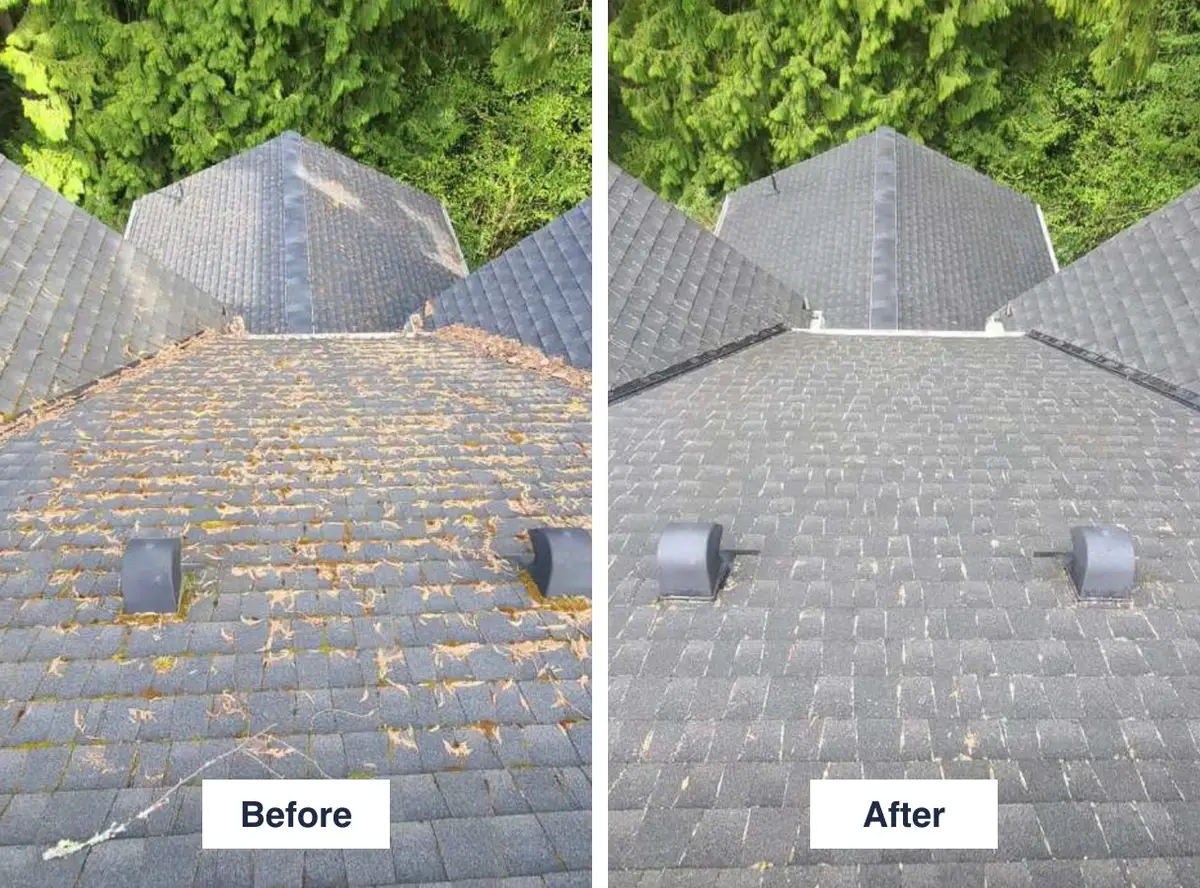
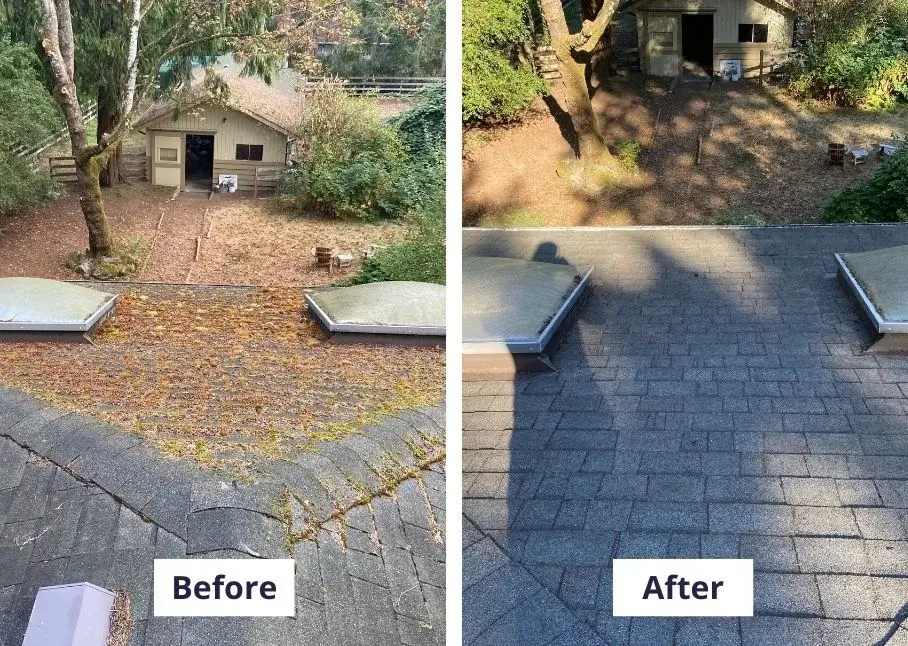
After the clean
Roof Moss Killer and Treatment: Slowing Regrowth in Ladysmith
No treatment keeps a Ladysmith roof clear for good. The hill still shades it and the harbour still dampens it. What a treatment can do is stretch the time between cleans, and it is worth knowing how.
The moss you can see is only part of it. Root threads and spores sit down in the shingle texture, and lichen grips too firmly to lift safely. The treatment in our soft wash, the product people usually mean when they search for a roof moss killer, is aimed at all of it. It goes on at low pressure and is left to work. Over the weeks and months that follow, the remaining growth weakens and the weather carries much of it off. We name the product before we use it.
Timing matters more here than in most places. The treatment needs a dry roof and a dry spell to follow, and a harbour-side roof can be wet with dew until late morning even in fair weather. We plan the application for the driest part of the day.
If you are selling, allow a few weeks between the treatment and the listing photos, so the dead moss has time to wash away.
Between visits, the useful jobs are small ones:
- move needles and leaves out of the valleys yourself, with a blower from a safe spot or a roof rake from the ground
- keep the gutters clear so the lowest row of shingles drains
- watch the bottom third of the roof and the uphill face, where regrowth shows first
Please stay off a wet roof, and never use a pressure washer on shingles or shakes. Details are on our moss treatment page.
A treatment after the clean slows regrowth on a Ladysmith roof, and on the shaded uphill side it will need repeating in time.
Close by
Moss Removal Near Ladysmith: Other Areas We Serve
Ladysmith is toward the south end of the area we cover, a short drive down the highway from Nanaimo. It is a regular stop, not an occasional one, and a single house is booked like any other job.
In town we work on the downtown blocks around First Avenue, the slopes above Transfer Beach, the harbour waterfront, the Davis Road area and the newer streets near Holland Creek.
Just south is Saltair, which is mostly single-family homes. We cover it as part of our Ladysmith work, so use the form here if that is where you live.
Further south again is Chemainus, a former mill town on Stuart Channel with its own mix of older houses and later subdivisions. Ladysmith and Chemainus jobs are often scheduled on one trip.
Going north, the highway passes Cassidy and reaches Cedar and Yellow Point. The properties there are rural: acreages, barns, shops and forest lots, with fog off the river on the low ground. North of that is Nanaimo, where our days start.
If you are on a rural road between Ladysmith and Cedar, or between Ladysmith and Chemainus, you are inside the area. Send the address and we will confirm.
One practical note for this town. If neighbours on your street want their roofs done as well, tell us when you ask. Houses on a hillside street often share one source of shade and one set of access problems, and scheduling them together lets the crew plan the whole block at once.
Parts of Ladysmith we get to: Downtown and First Avenue, Transfer Beach, Holland Creek, Davis Road, Harbour waterfront.
From Ladysmith we cover Saltair and Chemainus to the south and Cedar, Yellow Point and Nanaimo to the north.
Prices
Ladysmith Roof Moss Removal Prices and What Changes Them
Ladysmith roof moss removal: starting as low as $495
| Size of roof | Light growth | Heavy growth |
|---|---|---|
| 2,000 sq ft | About $600 | About $1,000 |
| 3,500 sq ft | About $1,000 | About $1,800 |
Compare that with a new roof: a full tear-off and re-roof on a house commonly runs $15,000 to $30,000 or more. Clearing the moss before it lifts the shingles can add 10 to 15 years to the working life of a roof.
These figures are a guide, not a quote. The size and steepness of the roof, what it is made of, how we reach it and how heavy the moss is all change the price, so every job gets its own free written quote once we have seen the roof.
Package pricing
Book gutter cleaning and roof moss removal for one visit and we take a package discount off the pair. Adding exterior cleaning, such as a mossy driveway, the front walk or window frames, counts toward it too. Concrete can take higher pressure; a roof only ever gets a low-pressure soft wash. The discount is written out line by line on your free quote.
Two Ladysmith houses with identical floor plans can get different quotes, and the hill is usually the reason. These are the things we weigh when we price a roof here.
The downhill wall. Plenty of houses here show one storey to the street and two or three to the back yard. Reaching the eaves on that side takes longer ladders, more tie-off points and more time, and it is the largest single factor on many streets.
Room to work. Narrow side yards, stairs, retaining walls and terraced gardens limit where a ladder can stand and how debris is carried out.
The condition of the roofing. An older roof is cleaned more slowly, and any section too worn to work on is left out of the job and out of the price.
How much growth, and where. A band of moss across the bottom third of one face is a smaller job than a full mat on the uphill side. Each face is priced for what is on it.
Lichen. Heavy lichen near the harbour adds time, because it cannot be scraped away without harming the shingle and has to be left to the treatment.
Material and roof shape. Cedar shake takes more care than asphalt. Low-slope and parapet roofs on downtown and strata buildings are quoted after a site visit.
Other work. The treatment is part of the roof job, not a line of its own. Gutter cleaning or window sills can go on one booking, and work booked together is priced as a package.
Roof area, not the footprint of the house, is what we measure. The written quote is free and lists each item, so you can see what the tall side accounts for and what the rest does.
Tell us which side faces up the hill and how tall the downhill wall is, and the written quote will account for both.
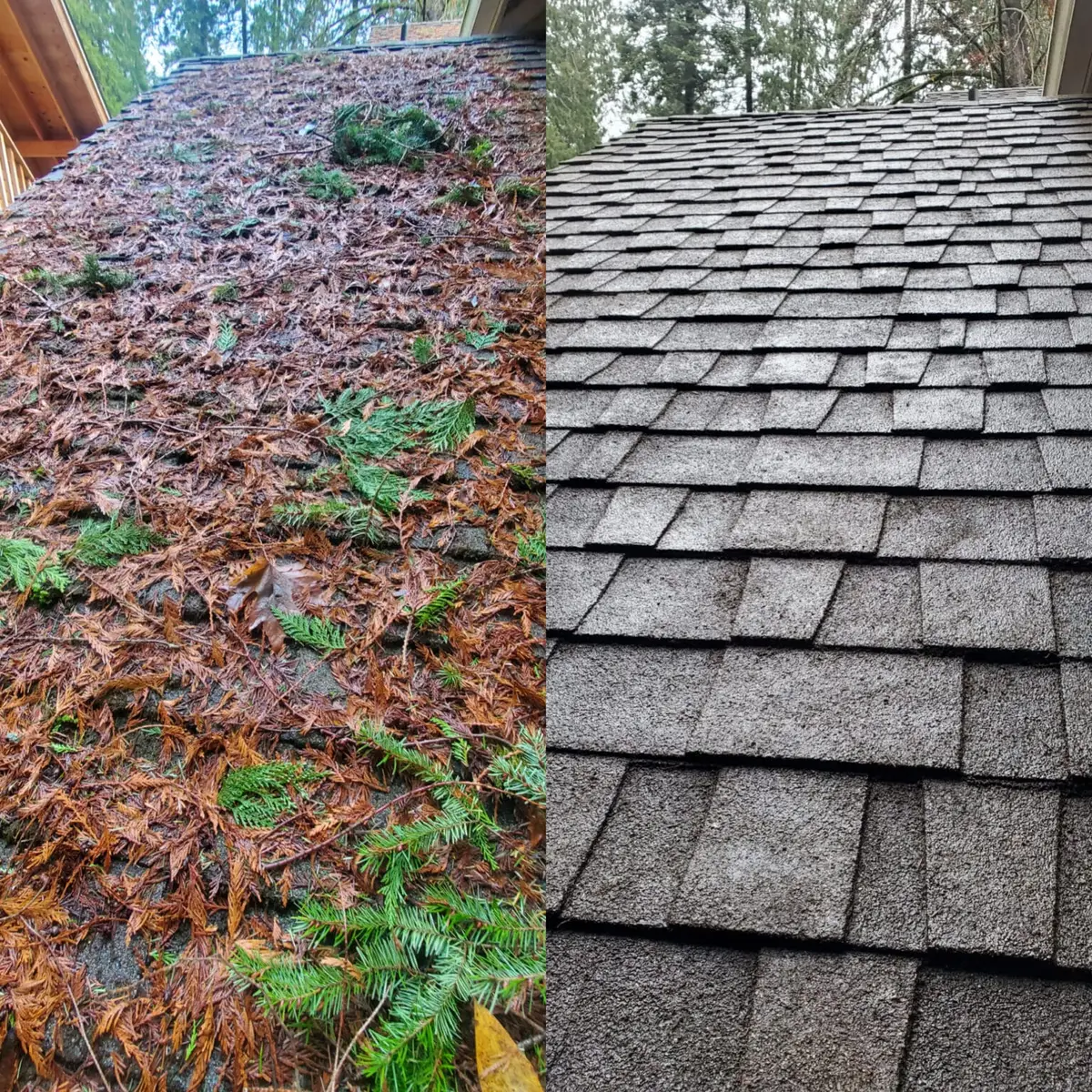
Booking
When to Book Roof Moss Removal in Ladysmith
Ladysmith jobs run all year, but the calendar is not even.
May to September is the easy stretch. Roofs are dry by mid-morning, even near the harbour, and the long days make up for the early shade the hill casts in the afternoon. Moss that has dried out comes away cleanly, and a treatment has settled weather to work in. Dates fill first in these months.
September and October are for getting ahead of the rain. Clearing the roof, the valleys and the gutters before the wet season means water has a clear path off the house when the storms come. On a tall downhill wall, a blocked gutter is not something you want to discover in November.
November to February is weather-dependent. The sun is low, the hill shades many roofs by early afternoon, and the dry part of each day is short. We work in the clear spells and move dates when we must. Call if something looks wrong, and we will come and tell you whether it can wait for spring.
March and April are when sellers tend to ring. If the house is going on the market, book a few weeks ahead of the photos so the treatment has time to brown off the moss.
Strata councils and owners of downtown buildings do best to ask early in the year. A shared roof needs a site visit, a written scope and usually a vote, and that takes longer than booking a house.
How often a roof needs doing depends on its shade. The uphill face of a house below tall trees regrows fastest.
Book the dry months for the roof itself, the early fall for gutters and valleys, and a few weeks ahead if you are selling.
Reviews
Reviews From Our Customers
5.0on Google
Hiring a crew from up the highway is easier when you know what others thought of them. These reviews come from people who have hired us. They call the crew reliable and timely, say the work was reasonably priced, and would recommend us to others.
5out of 5 stars
the most trustworthy and dependable guys I know. Always guaranteed to have an incredible experience.
R. S.
Review on Google5out of 5 stars
Oct 2026
Great job! Very reasonably priced. Extremely timely!
Katie L.
Review on Google5out of 5 stars
Oct 2026
Reliable and trustworthy service. Happy to recommend! Thank you.
Angela S.
Review on Google
Our customers describe the crew better than we can, so their words come first.
Get a quote
Get a Free Roof Moss Removal Quote in Ladysmith
Four details make a Ladysmith quote accurate: the address, roughly how old the roofing is, what it is covered with, and which side of the house faces up the hill. If the back of the house is taller than the front, say by how much. A photo of the worst slope, taken from the yard or the street above, helps a great deal.
We answer with a free written quote. If the roof needs a closer look first, we will arrange to come down and see it.
Fill in the form above, and a written quote for your roof follows.