
Author: Nanaimo Moss Removal
The short version: the right roof moss treatment in Nanaimo depends on how far the moss has got. Zinc or copper strips are a prevention idea for a clean roof. A chemical treatment applied as a low-pressure soft wash is what handles moss that is already growing. Manual work has a small, gentle role once the moss has been killed and has let go. Scraping living moss off asphalt shingles is the one option to rule out.
Most comparisons line the three methods up side by side as if every roof were the same. They are not. A house in an open subdivision with a faint green tint on one face needs something very different from a house under a stand of fir with needles packed solid in every valley. So instead of a scorecard, this guide walks a roof through three stages and says which method earns its place at each.
Before choosing: how moss holds on
Moss does not have true roots. It anchors with thin threads called rhizoids, described by the University of Maryland Extension as root-like anchoring structures. That one fact explains most of what follows. Strips can discourage new spores from settling. Pulling off the green top leaves the anchors in place. A treatment that reaches the whole plant is the only one of the three that deals with what is already there.
Shade and wet do the rest. Moss favours moist, shaded places and grows hardest through the cool, humid winter. On treed Nanaimo and Lantzville lots, the north faces and the valleys under the firs are where each stage arrives first.
Stage one: a thin green film
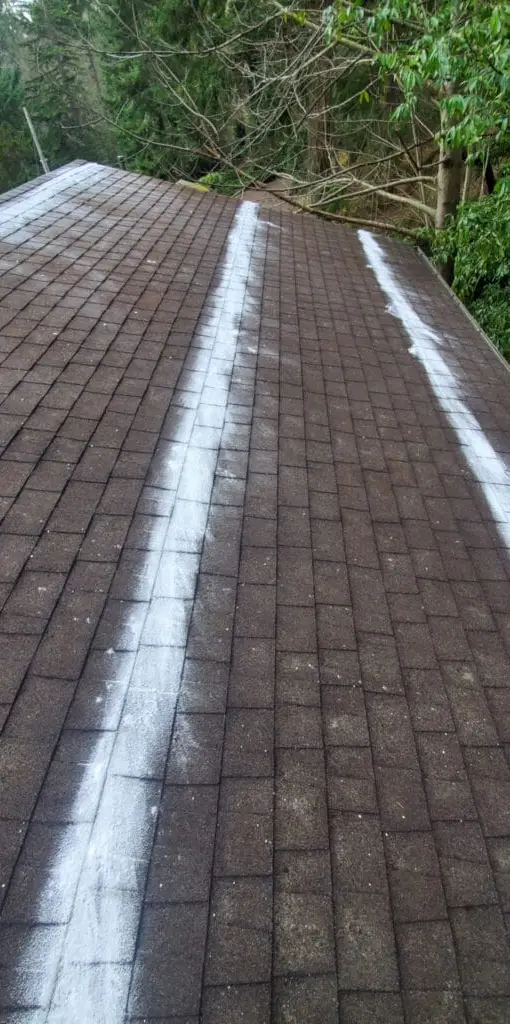
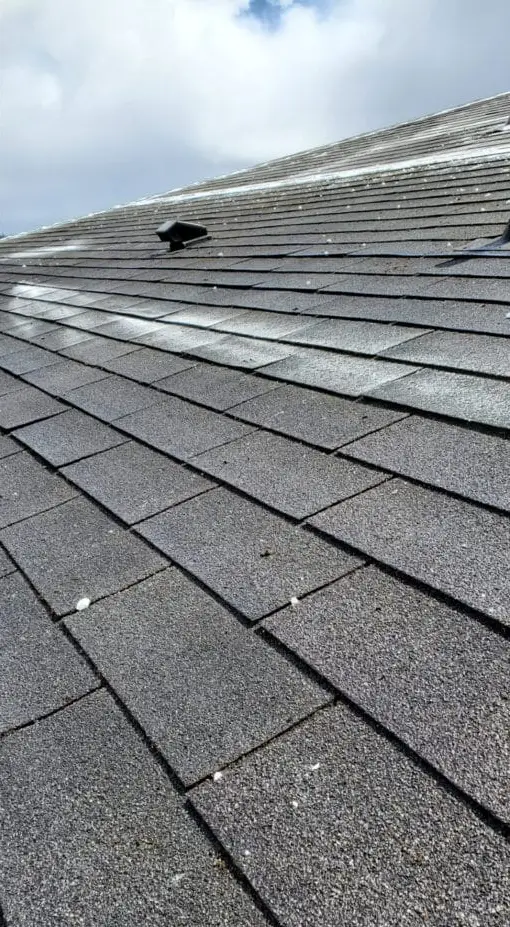
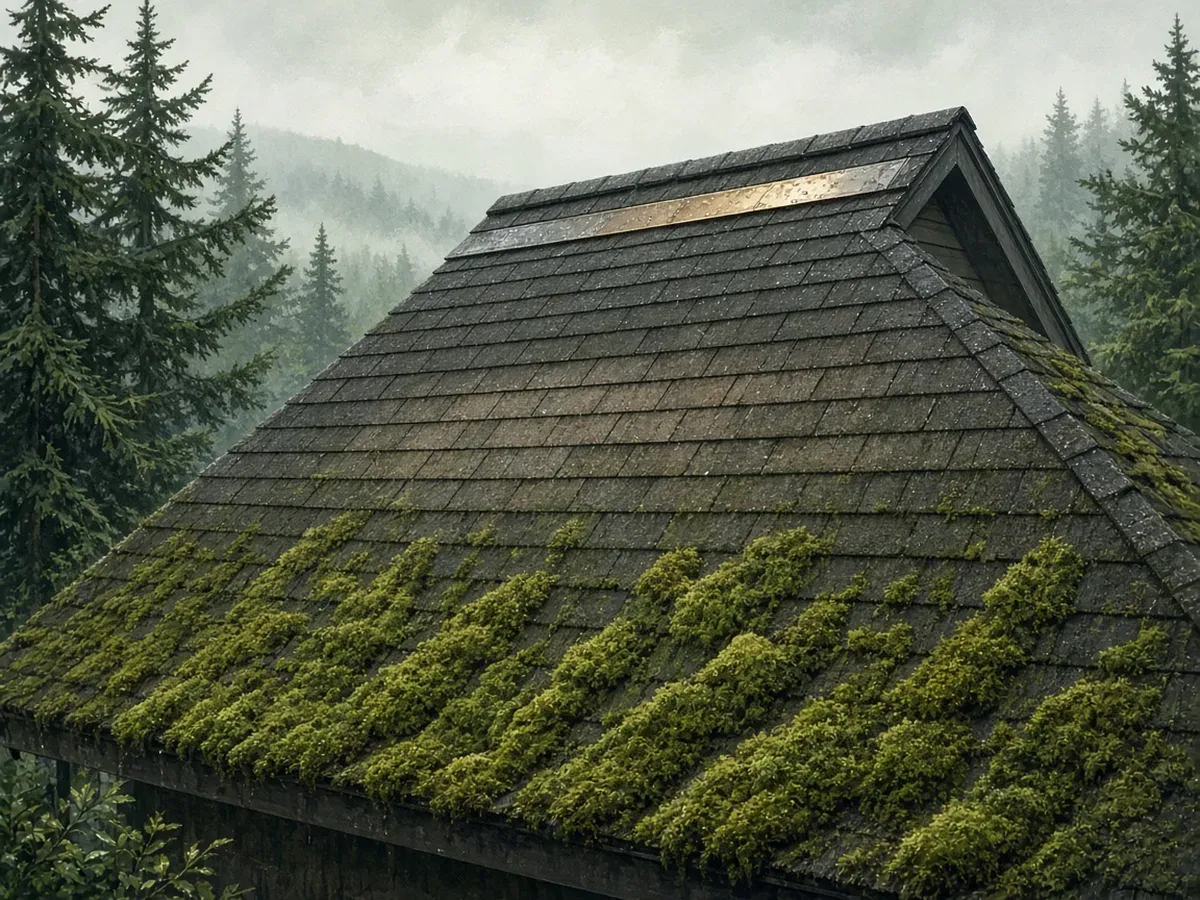
What you see: a faint green or dark tint, mostly on the shaded side, with no real thickness to it yet. The shingles still lie flat.
Zinc or copper: this is the stage where strips make the most sense, and even then with limits. ARMA lists them as a preventative option when a roof is being replaced. Their effect is strongest just below the metal and fades toward the eaves. On an existing roof ARMA says adding strips is not recommended, since the fastening can leave exposed nails or a broken sealant bond.
Chemical (soft wash): a light film is an easy job for a low-pressure treatment, and the roof is in good shape to take it.
Manual: nothing at this stage is worth scrubbing at, given the granules it would cost.
Our take: if the film is light and the roof sits in the open, it can usually wait for a convenient dry week. Under fir, it will not stay light for long.
Stage two: established cushions
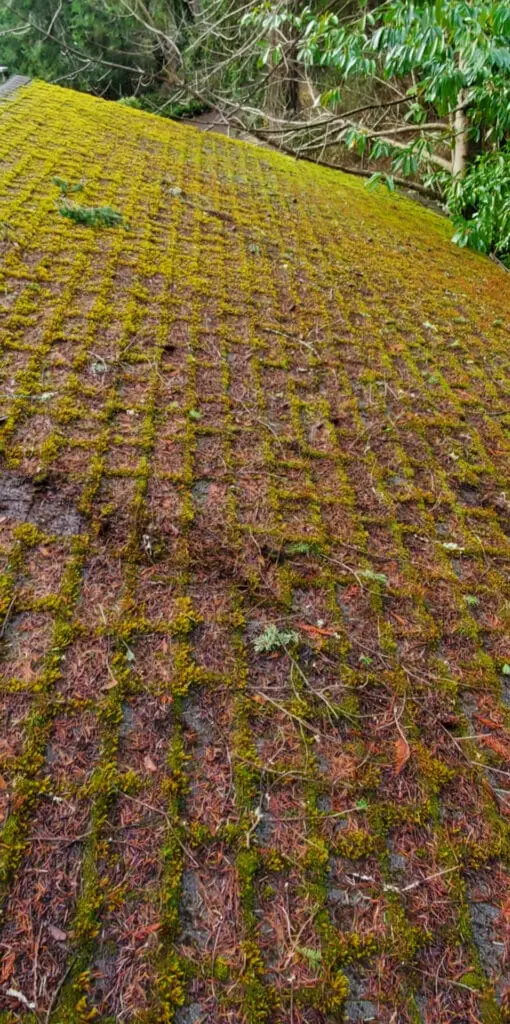
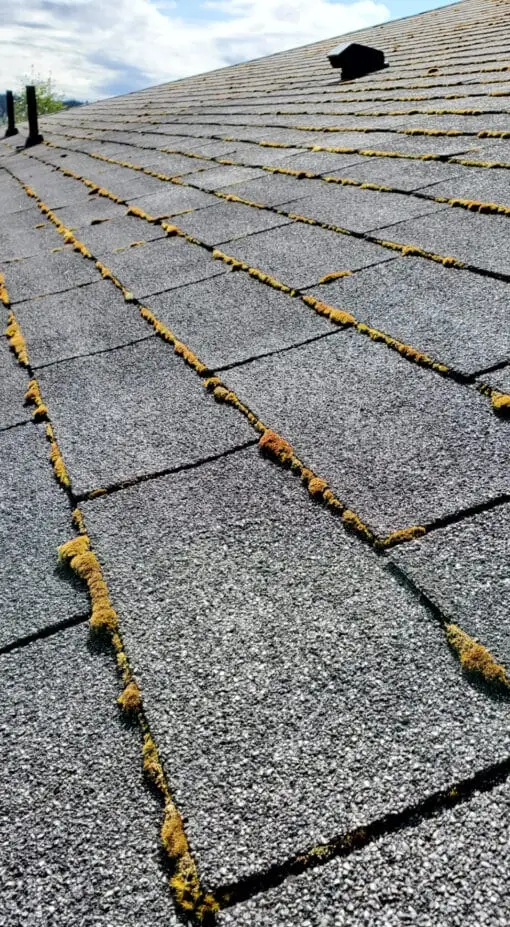
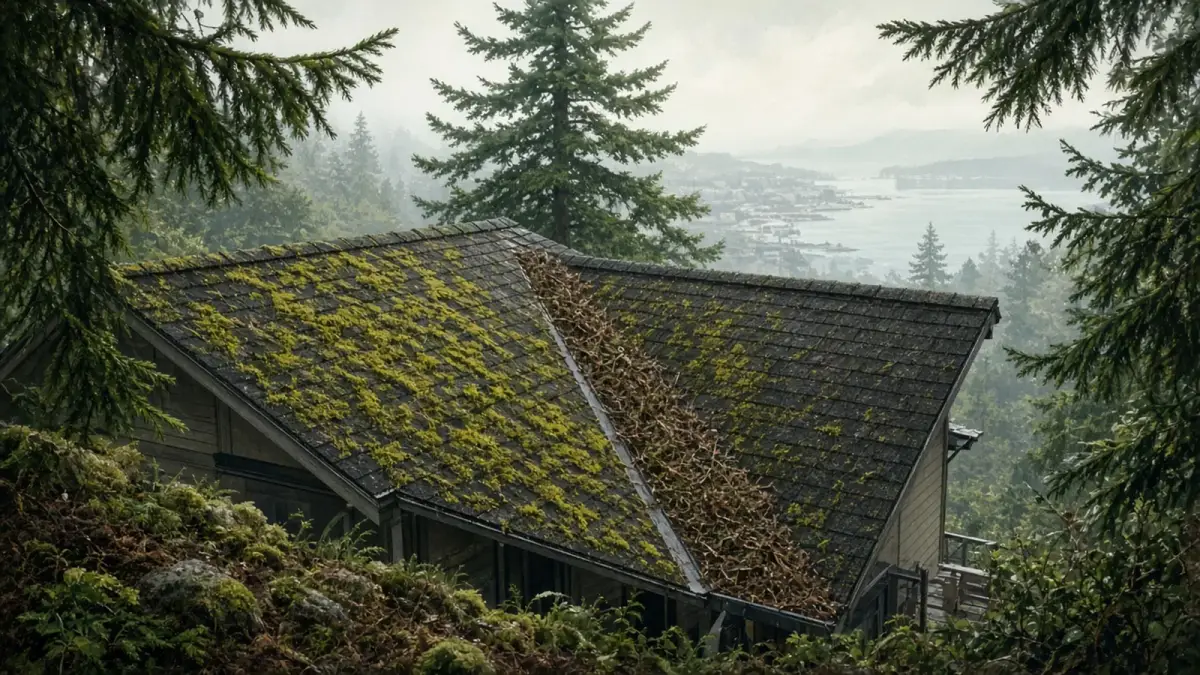
What you see: soft green mounds sitting on the shingles, thickest along the lower courses and in the valleys. Fir needles are tangled into them, holding water against the roof after every rain.
Zinc or copper: too late to help with what is there. A strip at the ridge does nothing for a cushion halfway down the slope, and it cannot reach around valleys or behind a chimney where needles collect.
Chemical (soft wash): this is the stage where a treatment does its real work. Applied across every slope at low pressure, it reaches the lower courses and the needle-filled seams that strips miss. ARMA’s published asphalt shingle method is a 50:50 laundry-strength bleach and water mix with a short dwell and a low-pressure rinse, with landscaping protected. After that, treated moss loosens over time, and ARMA mentions a leaf blower for clearing it once it is loose.
Manual: stiff brushes and scrapers are out. ARMA warns that brushes and brooms remove the granules that protect the shingle. Clearing loose needles out of a valley is a different matter, and it has to happen so the roof can dry.
 Illustration
Stage three: thick mats lifting shingle edges
What you see: deep, spongy mats, with shingle tabs visibly raised at the leading edge. Gutters below are usually choked with moss and needles.
Why it matters: ARMA says moss can make shingle edges lift or curl, raising the chance of blow-off in wind, and in severe cases can move water sideways and damage the roof deck. Oregon State University Extension notes that moss lifts the shingles and lets water through to the materials underneath. Not sure your roof has reached this stage? A ground-level check of moss-damaged shingles will help you place it.
Zinc or copper: no role at this stage.
Chemical (soft wash): still the right first move, and ARMA notes that severe growth may need more than one treatment to finish it off.
Manual: this is where scraping does the most harm. The moss is already prying at those edges, and a scraper only lifts them further. Kill it first, let it release, and then clear what has come loose gently.
How we handle a roof at any stage
Every roof we take on gets the same method: a low-pressure soft wash carrying the moss treatment, which is included in the job rather than sold as an extra. We never use high pressure on asphalt shingles. Higher pressure is reserved for hard ground such as concrete driveways and walkways, and concrete roof tiles get the same low-pressure soft wash, with each tile roof planned on its own. The asphalt shingle roofs and roof moss removal pages explain more, and our roof moss killer guide goes through the home remedies people try.
The job does not rely on a routine follow-up treatment. Moss can still come back, most of all on shaded slopes under heavy needle fall, and our moss treatment and prevention page covers ways to slow that.
If needles have packed your gutters as well, gutter cleaning can be booked for the same visit, and doing both together qualifies for our package pricing.
Cost and timing by stage
As a guide, a roof of about 2,000 sq ft costs about $600 at the light end and about $1,000 when the moss is heavy, so stage three usually sits near the top. Our soft-wash price guide breaks down what moves the number. Commercial and strata roofs are priced per project.
Our main season is the dry stretch from late spring to early fall. A roof at stage one can usually wait for a convenient date in that window. A roof at stage three is worth getting on the list before the wet months, since moss flourishes in winter. Heavy rain right after an application can wash it off early, so we pick a sensible window with you.
We work across Nanaimo, Lantzville, Cedar, Nanoose Bay and Errington, along with Ladysmith, Chemainus, Coombs, Parksville and Qualicum Beach.
Stage questions from homeowners
How can I tell which stage my roof is at from the ground?
Look for thickness and for tab edges that no longer sit flat. A tint is stage one, soft mounds are stage two, raised edges mean stage three.
Is copper sulfate a good DIY treatment?
We do not recommend mixing it and do not publish a recipe. Washington State University Extension notes copper in roof runoff can harm aquatic life, and on a sloped lot that runoff travels downhill.
Can a roof go back from stage three to stage one?
Once the mats are treated and cleared it can look like stage one again, but regrowth depends on shade and needle fall. No honest crew will promise the moss stays away.
Why does the valley always come back first?
Needles hold water there, and moss loves steady damp. Keeping valleys and gutters clear helps any treatment last longer.
Talk to us about your roof
Call (778) 762-3475, text us, or use the quote form. Tell us your community, the roofing material and which stage you think you are looking at. Nanaimo Moss Removal has been treating mid-Island roofs since 2021, and every quote is free with the price set before work starts.
These figures are a guide, not a quote. The size and steepness of the roof, what it is made of, how we reach it and how heavy the moss is all change the price, so every job gets its own free written quote once we have seen the roof.