
Author: Nanaimo Moss Removal
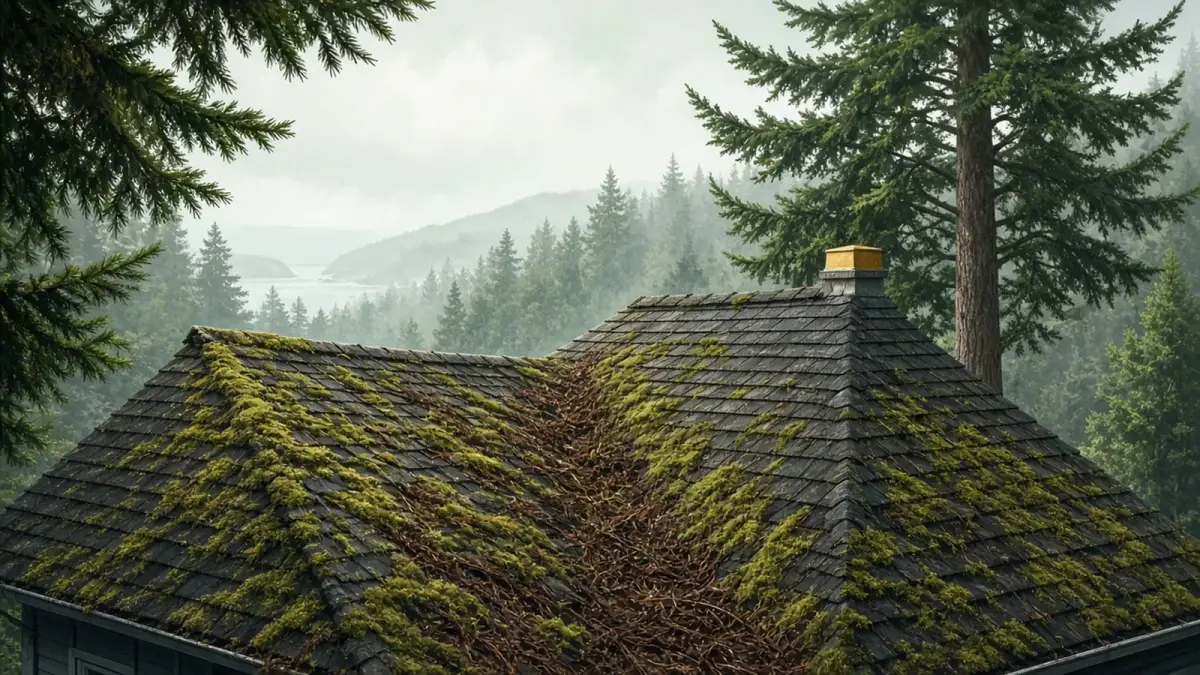
In one line: the roof moss killer that holds up on a Nanaimo roof is a low-pressure soft wash that treats the whole plant, not a kitchen-cupboard recipe and not a pressure washer. Below are the six ideas we hear most often from homeowners, one at a time, with what the roofing sources say about each.
Ask around a Nanaimo neighbourhood about moss on the roof and you will get plenty of advice. Some of it comes from a brother-in-law, some from a video, some from the back of a jug at the hardware store. A few of these ideas are reasonable, a few do nothing much, and two can cost you shingles. We have sorted them using the Asphalt Roofing Manufacturers Association (ARMA) and university extension writing, so you can judge each one before climbing a ladder.
First, what any killer is up against
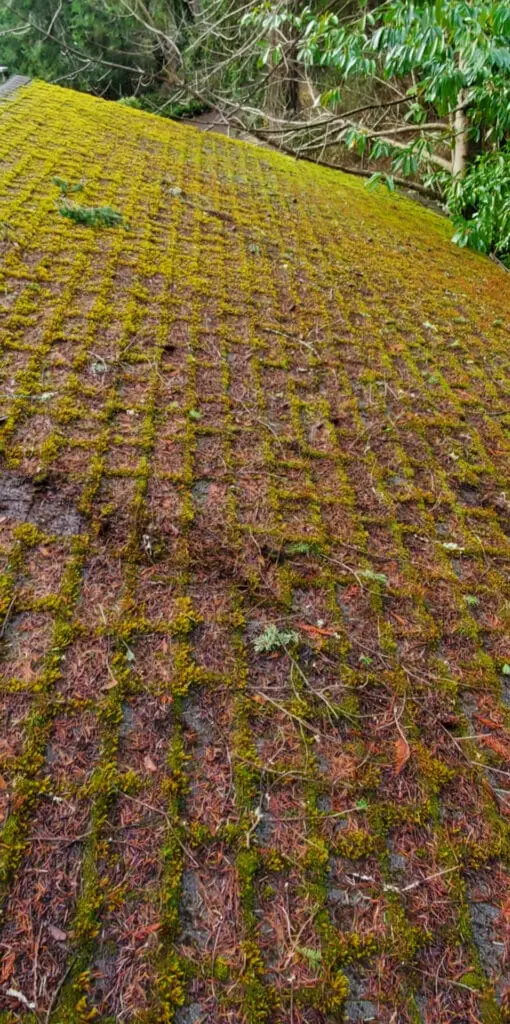
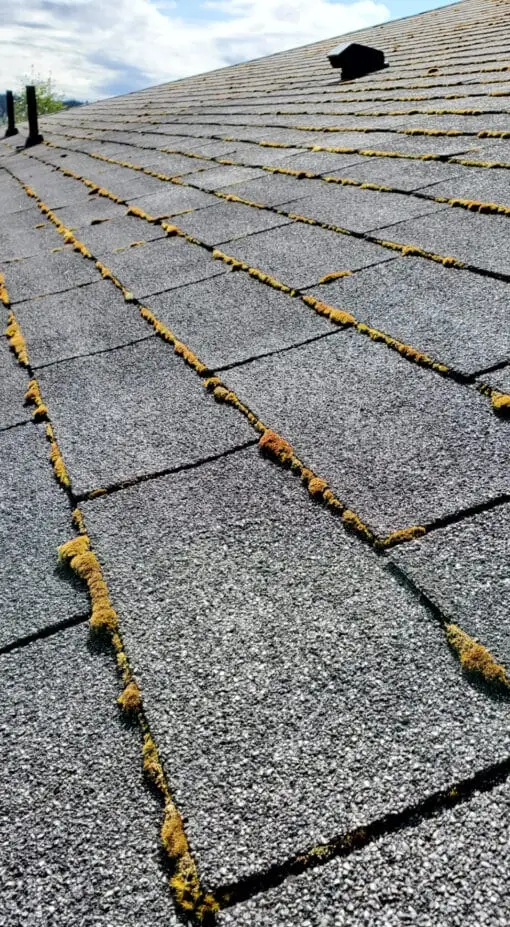
Moss has no true roots. It clings with fine threads that the University of Maryland Extension calls root-like anchoring structures, named rhizoids. Anything that only browns the green surface, or tears it away, tends to leave those threads behind in the shingle grit, and on a damp, shaded slope the cushion comes back.
It also helps to know why it is there. Moss prefers moist, shaded places and does its best growing in winter, when cool, humid air keeps it wet. Tall firs over a roof provide both, and their needles pile into valleys and keep the shingles damp for weeks. Keep that in mind as you read the list.
Myth one: “Just bleach it”
What it does: chlorine bleach does kill moss and algae, and it is the one home product that roofing guidance actually names.
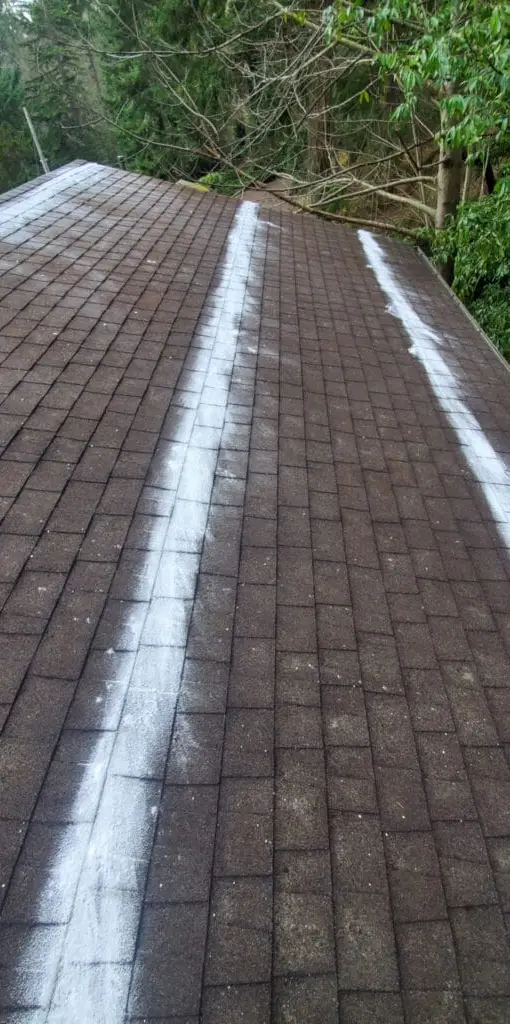
What the source says: ARMA’s published method for asphalt shingles is a 50:50 mix of laundry-strength bleach and water, left to sit for a short, set time and then rinsed off at low pressure. ARMA also says severe growth can take more than one round.
When it backfires: when the plants underneath get soaked, or when the mix is allowed to dry on the roof before rinsing, which ARMA warns against. Bleach also makes a pitched roof slick. ARMA’s advice is to protect landscaping and to consider professionals, because a cleaned roof can turn slippery and hazardous. Check what your shingle maker allows before you start.
Myth two: “Vinegar is the natural option”
What it does: vinegar turns up constantly in homemade recipes online.
What the source says: nothing. Vinegar is not part of ARMA’s guidance for cleaning asphalt shingle roofs, and none of the extension sources we rely on recommend it for roofs.
When it backfires: the risk is mostly wasted effort. A spray that browns the top of the cushion can look like a win for a week while the rhizoids carry on underneath. We do not offer vinegar as a proven roof moss killer, because the sources do not back it.
Myth three: “Dish soap does the trick”
What it does: dish soap is another common recipe ingredient.
What the source says: like vinegar, it does not appear in ARMA’s published roof cleaning advice. We have no source that tells us what it does to shingle granules over time.
When it backfires: soapy water on a pitched roof is slippery, and you are standing on it. If you want something that the roofing industry has written down, the bleach method above is the one with guidance attached.
Myth four: “Scrape it or brush it off”
What it does: a scraper or stiff broom pulls the visible moss away fast, and the roof looks better that afternoon.
What the source says: ARMA tells homeowners not to use brushes or brooms on asphalt shingles, because the friction loosens and removes the protective granules.
When it backfires: almost always on asphalt. You lose granules, and because the anchoring threads stay put, the green returns. Where moss is already lifting a shingle edge, a scraper levers that edge up further. Our crew uses a low-pressure soft wash that carries the treatment, and the treatment does the killing.
Myth five: “A pressure washer gets it all off”
What it does: it blasts moss and dirt off quickly, which is why it is popular.
What the source says: ARMA is blunt. Never use a pressure washer on an asphalt shingle roof; high pressure strips granules and very likely shortens the life of the roof.
When it backfires: every time on shingles. We never put high pressure on asphalt shingles. Higher pressure has a place on hard ground such as concrete driveways and walkways, and concrete roof tiles get a low-pressure soft wash too, with each tile roof planned on its own. Our asphalt shingle roofs page has the details.
Myth six: “Zinc strips will kill it for me”
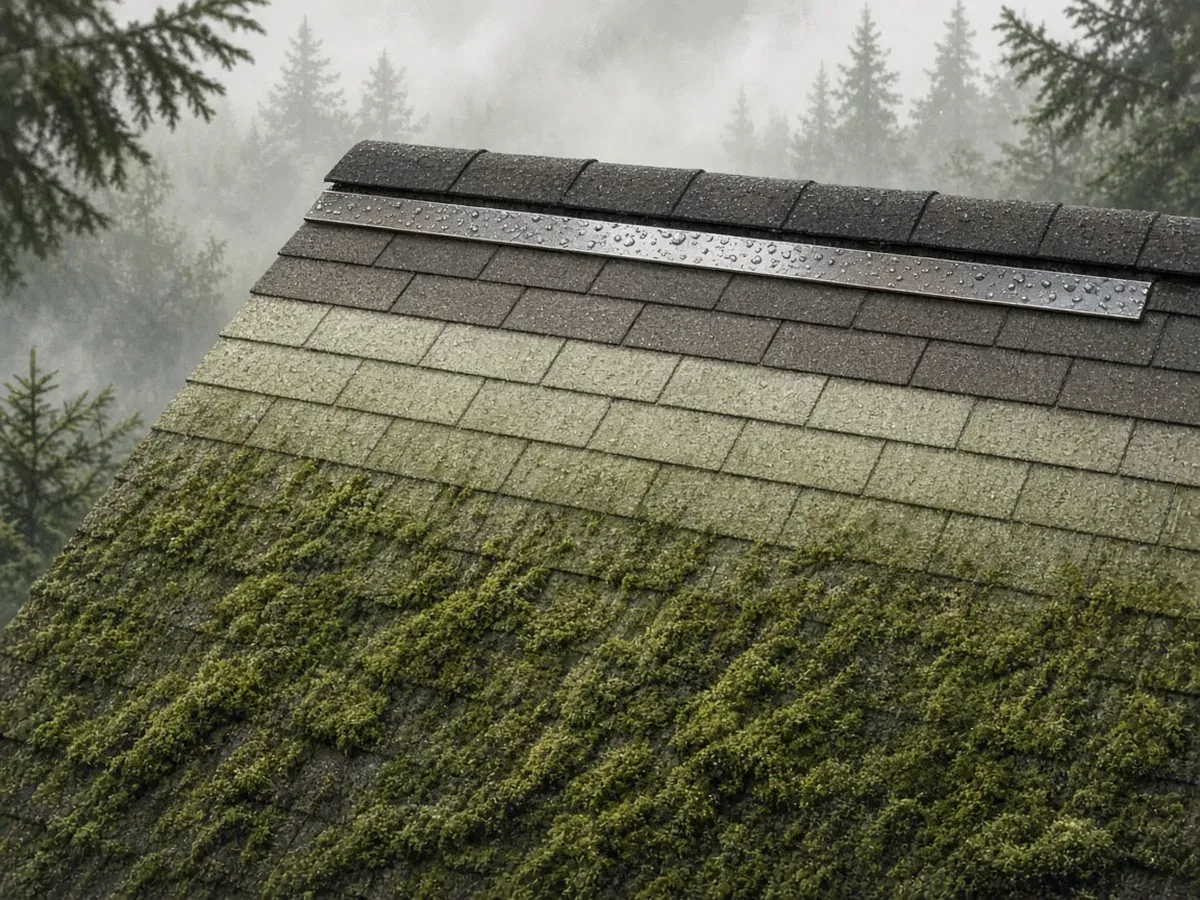
What it does: zinc or copper strips near the ridge shed a little metal in rain, which can discourage new growth on the slope below.
What the source says: ARMA lists strips as a preventative choice when a roof is being replaced, but says adding them to an existing roof is not recommended, because the fasteners can leave exposed nails or break the sealant bond.
When it backfires: when it is expected to clear moss that is already growing. A strip does nothing for a needle-packed valley or the lower courses far from the ridge. It is a prevention idea, not a killer.
 Illustration
Why it is worth getting right
Leaving moss in place is not neutral. Oregon State University Extension explains that moss lifts the shingles on asphalt roofs, letting water reach the layers underneath. ARMA adds that it can make leading edges lift or curl, which leaves them open to wind. A treatment that only stains the moss brown does not fix that. If you are unsure how far along your own roof is, our post on how to read shingle damage before you choose a fix starts at the foot of the downspout.
What we put on the roof instead
Our roof moss removal is a soft wash: a low-pressure application of the moss treatment, which is included in every job. Treated moss keeps loosening over time after we leave, so a little brown can linger. The job does not depend on a routine follow-up treatment, though moss can come back, especially under trees. Our moss treatment and prevention page covers ways to slow it, and the full service is on the roof moss removal page.
Our prices start as low as $495. For a house carrying roughly 2,000 sq ft of roof, expect around $600 if the growth is thin, rising toward $1,000 where it is thick. Commercial and strata roofs are quoted per project.
The calendar fills from late spring to early fall, so ask about openings when you get in touch. The roof has to be dry before we walk it, so a date can move with the forecast.
We work in Nanaimo, Lantzville, Cedar, Nanoose Bay, Errington, Ladysmith, Chemainus, Coombs, Parksville and Qualicum Beach.
Quick answers
Is there a moss killer I can safely use in the rain?
Rain washes a fresh application off before it can work, and a wet roof is a dangerous place to stand. Wait for a dry spell, or ask us about timing.
Do I need to brush the moss before I spray?
No. ARMA advises against brushing or scrubbing asphalt shingles. Treat first and let the dead growth loosen; our low-pressure soft wash works the same way, with the rain doing the clearing over the following weeks.
Is a soft wash just a gentler pressure wash?
It is a different job. The pressure stays low, and the treatment, not the force of water, is what kills the moss.
Who will be on my roof?
Our own crew, removing moss on mid-Island roofs since 2021.
Book a look at your roof
Call (778) 762-3475, send a text, or fill in the quote form. Let us know your community, what the roof is covered with and how heavy the moss looks. Quotes are free and the price is set before we start.
These figures are a guide, not a quote. The size and steepness of the roof, what it is made of, how we reach it and how heavy the moss is all change the price, so every job gets its own free written quote once we have seen the roof.